Buying Direct From an Atelier vs a Department Store
When you buy a cashmere scarf from a department store, there are usually several intermediaries between the workshop and the shelf: a wholesaler, a distributor, sometimes a licensing arrangement, and the store itself, each adding a margin. When you buy directly from an atelier, that chain is shorter, sometimes reduced to just the maker and you. This has real consequences for price, for how much the seller can tell you about the piece, and for what is possible in terms of customisation. This guide compares the two honestly, without pretending one is always right.
What Buying Direct From an Atelier Typically Offers
A shorter path from maker to buyer. Fewer intermediaries can mean more of what you pay reflects the actual cost of materials and labour, rather than layers of wholesale and retail margin. This does not guarantee a lower price than a department store, since an atelier's costs and positioning vary, but it does mean the pricing logic is more direct.
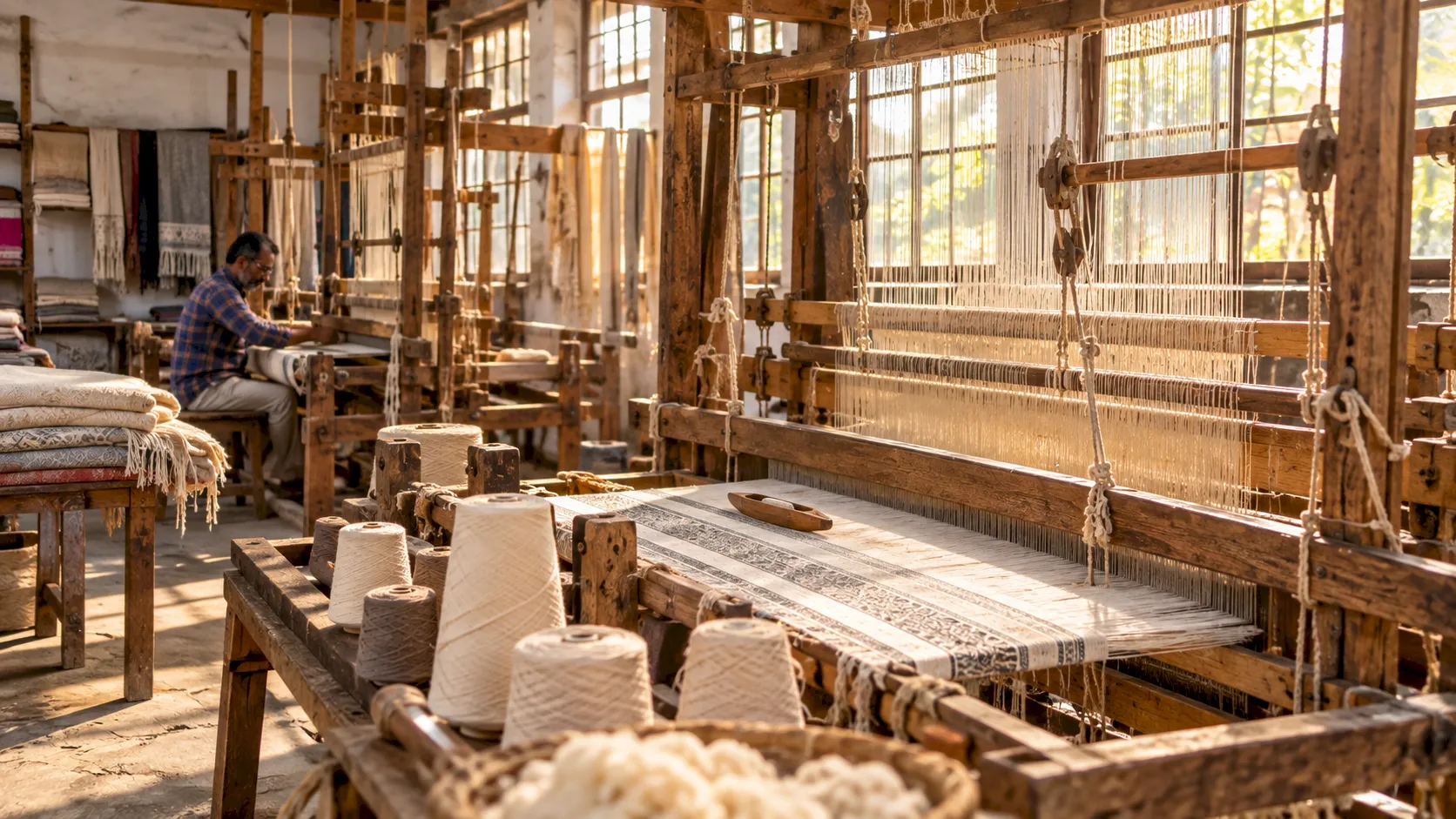
More specific answers about origin and construction. An atelier selling its own work can usually tell you exactly where a piece was made, by whom, and how, because that knowledge sits within the same organisation. A department store selling a brand it stocks is often several steps removed from that information, even when the sales staff are well-intentioned.
Personalisation that mass retail generally cannot offer. Monogramming, bespoke colourways, and custom commissions such as a woven portrait require direct access to the people doing the actual weaving and finishing. A department store selling pre-made stock cannot usually offer this, because the production relationship does not exist at that level. Our personalisation page explains what is possible when you have that direct line to the atelier.
A direct channel for questions and after-sale support. If a question or an issue arises after you buy, you are usually dealing with the people who actually made the piece or who work closely with them, rather than a customer service layer disconnected from production.
What a Department Store Typically Offers
In-person comparison across many brands at once. This is genuinely useful if you want to compare several pieces side by side before deciding, something a single atelier's own site cannot replicate.
The ability to touch and try before buying. For a first-time buyer unfamiliar with how cashmere, merino wool or silk should feel, this hands-on comparison has real value, which is part of why we have written guides like how to spot a high-quality luxury scarf to help close that gap for online buyers.
Sometimes broader, more standardised return networks, particularly useful if you want the option to return an item to a physical location rather than shipping it back.
Established brand recognition, which for some buyers, particularly when choosing a gift, carries its own value independent of the product itself.
Where the Comparison Gets More Nuanced
Price is not automatically lower direct from an atelier. It depends on the atelier's own costs, scale and positioning. What direct buying more reliably offers is transparency about what drives that price, not a guaranteed discount.
Quality control differs in structure, not necessarily in outcome. A department store brand often has formal, standardised quality control processes across a large production run. A smaller atelier's quality control is usually more hands-on and personal, since fewer pieces pass through fewer hands, but it depends more on the consistency of those specific people.
Return convenience varies by seller, not by category. Some ateliers offer straightforward, generous return policies; some department stores make returns needlessly complicated. It is worth checking the actual policy rather than assuming one model is inherently better. Ours is set out in full in our refund and cancellation policy.
Questions Worth Asking Before You Choose
Whichever you are considering, these questions apply equally:
- Where exactly was this piece made, and by whom? A specific answer is a good sign; a vague one is worth noting.
- What is the fibre content, stated precisely? This matters regardless of where you buy.
- What is the return policy, in specific terms, not just in general reassurance?
- Is personalisation available, and if so, how is it priced and how long does it take?
- How will I be able to reach someone if I have a question after I buy?
When Direct-From-Atelier Makes the Most Sense
Buying direct tends to make the most sense when you want a personalised piece, when you specifically value knowing exactly how and where something was made, when you are buying for a meaningful occasion where a bespoke element adds real significance, or when you have already identified a maker whose work you trust and simply want to buy from them directly rather than through an intermediary.
When a Department Store Makes More Sense
A department store can make more sense when you want to physically compare several different brands and fibres before committing, when you are not yet sure what you are looking for and want to touch things before deciding, or when convenience and a familiar in-person return process matter more to you than the directness of the relationship with the maker.
How the Supply Chain Actually Adds Cost
It helps to understand concretely where mark-up accumulates in a typical department store supply chain. A piece usually leaves the workshop at a wholesale price covering material and labour plus a reasonable margin for the maker. A distributor or agent then adds its own margin to cover the cost of representing multiple workshops or brands to retail buyers. The department store itself then applies a retail margin that covers its own overheads, rent, staffing, marketing, and store operations, which are real and legitimate costs, but costs that simply do not exist in the same way for a seller operating primarily online, direct from the workshop. None of this means department store margins are unfair; retail overhead is real. It does mean that, for comparable fibre and construction, a direct-from-atelier price has fewer layers of margin built into it.
Brand Value Is a Real, Separate Factor
It is worth being honest that an established department store brand carries a form of value beyond the physical product: recognised brand reputation, a certain social signal when gifting, and often a longer track record a buyer can research. This is not nothing, and for some buyers and occasions it is worth paying for specifically. The comparison in this guide is about the mechanics of direct versus intermediated selling, not a claim that brand recognition has no value at all. Deciding how much that recognition matters to you personally is a separate, legitimate part of the decision.
What This Means Practically for a Cashmere or Silk Purchase
For a natural fibre piece specifically, where the actual story of origin and craftsmanship is a meaningful part of the appeal, buying direct tends to offer more of that story in specific, checkable detail, since the seller is the maker rather than a reseller several steps removed. If knowing exactly how your piece was made matters to you as much as the piece itself, this is one of the clearer practical reasons to favour a direct relationship over a department store purchase, alongside the typical reduction in mark-up layers.
Frequently Asked Questions
Is buying direct from an atelier always cheaper?
Not necessarily. It depends on the atelier's own costs and positioning. What it more reliably offers is transparency about what is actually driving the price, since there are fewer intermediaries between you and the maker.
Can a department store tell me exactly where a scarf was made?
Sometimes, but often less precisely than buying directly from the maker, since department stores are usually several steps removed from the actual production relationship.
Why can't department stores usually offer personalised or bespoke pieces?
Personalisation such as monogramming or custom weaving requires direct access to the artisans doing the work. Department stores sell pre-made stock and typically do not have that direct production relationship.
Is it riskier to buy directly from a smaller atelier than from a known department store brand?
Not inherently, but it shifts what you should check: the atelier's stated return policy, contact details, and how specifically they describe their own production, rather than relying on general brand reputation.
What should I check regardless of where I buy?
The stated fibre content, the return policy in specific terms, and whether the seller can answer direct questions about origin and construction clearly.
Buy Direct From Our Atelier
Explore our collection, learn how our pieces are made, or begin a personalised commission made specifically for you.