Why Natural Fibres Matter
Almost everything we make at VANYRA ATELIER comes down to a single choice made early: to work in natural fibres rather than synthetic ones. That choice shapes everything after it, from how a piece feels to how it should be cared for, so it is worth explaining clearly rather than simply asserting it as a value.
This article sets out what a natural fibre actually is, how cashmere, merino wool and silk differ from synthetic alternatives, and where natural fibres genuinely have trade-offs rather than only advantages.
What Makes a Fibre Natural
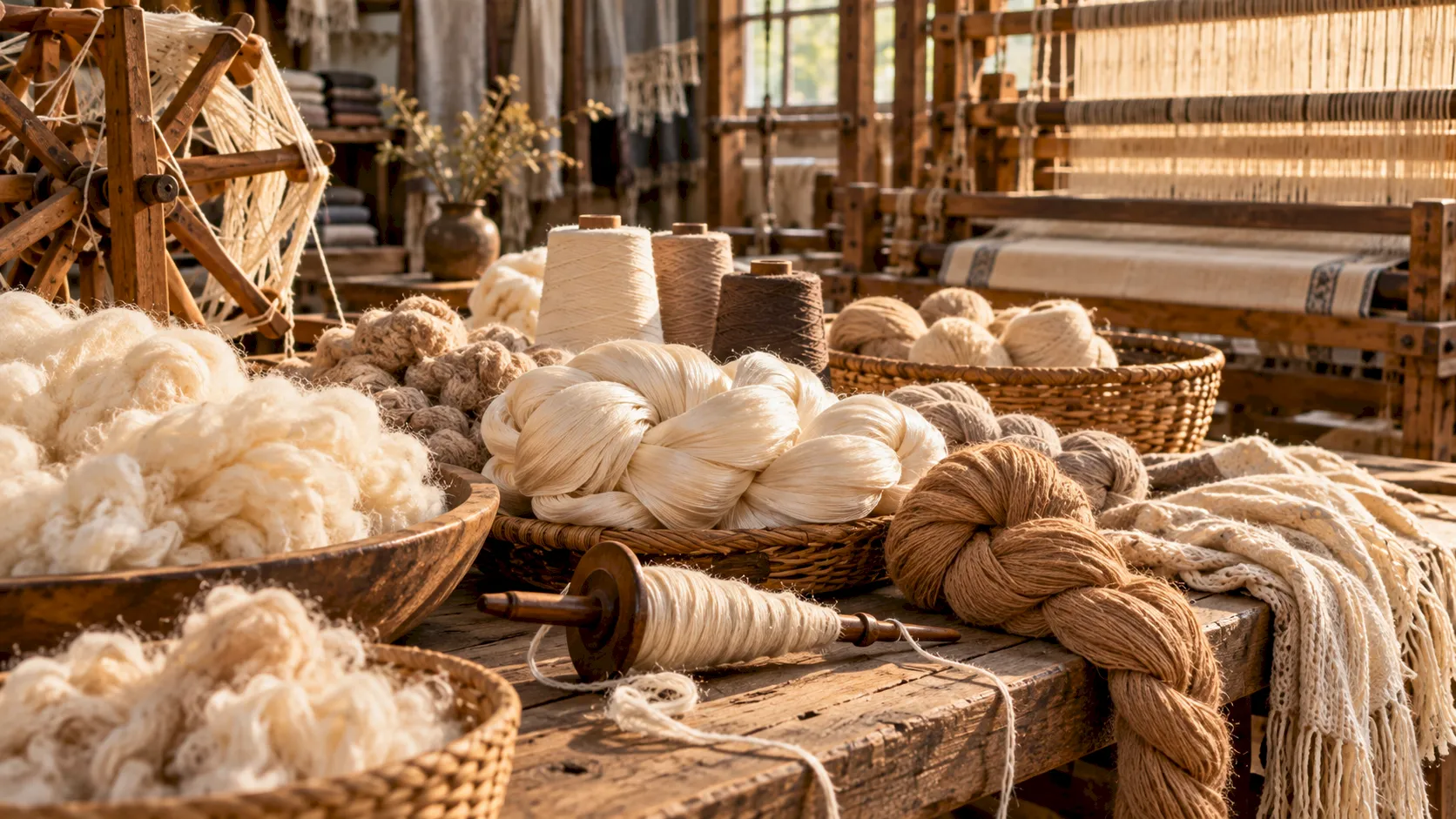
A natural fibre is one that is grown or produced by a living organism, rather than manufactured from chemical processes. Cashmere and merino wool are combed or shorn from animals. Silk is produced by silkworms as they spin their cocoons. Cotton and linen, though we do not work with them here, are grown from plants. In every case, the fibre exists in nature before it is gathered and processed into yarn.
Synthetic fibres, by contrast, are manufactured, most commonly from petroleum-derived polymers such as polyester, nylon or acrylic. They did not exist as fibres until an industrial process created them. This distinction is not simply academic. It has real consequences for how a fabric behaves and ages.
How Natural Fibres Behave Differently
Breathability and temperature regulation
Natural fibres tend to allow air and moisture to pass through them more readily than most synthetics. This is part of why wool and cashmere feel warm without feeling stifling, and why silk can feel comfortable across a range of temperatures rather than trapping heat the way many synthetic fabrics do.
Hand feel and drape
The particular softness of cashmere, the resilience of merino wool and the sheen and drape of silk are qualities that come from the specific structure of each natural fibre at a microscopic level. Synthetic fibres can imitate some of these qualities, but they typically feel different against the skin, even when they are engineered to look similar.
Ageing
Natural fibres tend to age in a way that many people find appealing: cashmere softens further with wear and proper care, and hand-loomed pieces can develop a settled, lived-in character over years. Synthetic fabrics are generally more dimensionally stable, which means they change less over time, for better or worse depending on what you want from a piece.
Biodegradability
At the end of a natural fibre garment's life, the fibre itself will biodegrade, given the right conditions, because it is an organic material. Synthetic fibres, being derived from plastic, persist for a very long time and can shed microplastic particles during washing throughout their use. This is one of the clearer environmental distinctions between the two categories, and it is part of our thinking in sustainable luxury and natural fibres versus synthetics.
Where the Trade-offs Are Real
It would be dishonest to present natural fibres as superior in every respect. There are genuine trade-offs, and being clear about them is part of respecting the choice you are making.
Cost. Natural fibres, particularly cashmere and silk, are generally more expensive than synthetic equivalents. This reflects the cost of raising or gathering the fibre, the skill involved in processing and weaving it, and the fact that hand work is slower than industrial production.
Care. Natural fibres generally require more careful handling: gentler washing or dry cleaning, protection from moths for wool and cashmere, and more thought given to storage. Synthetic fabrics are often more forgiving of careless washing.
Fragility in some forms. Very fine natural fibres, particularly fine cashmere and silk, can be more delicate in some respects than robust synthetic equivalents, though this varies enormously depending on the specific fibre, weave and finishing.
We think these trade-offs are worth making, but we would rather state them plainly than pretend they do not exist.
Why We Work Only in Natural Fibres
Given these trade-offs, the reason to choose natural fibres has to be more than habit or assumption. For us, it comes down to three things.
The result feels different. Once you have felt genuine cashmere, merino wool or silk against your skin, the difference from a synthetic imitation is usually immediately apparent, not something you have to be told to notice.
They are made to last, not to be replaced. A well-made natural fibre piece, properly cared for, can last for many years and often improves with age rather than degrading. This is the opposite of the throwaway model that many synthetic textiles are designed around.
They connect to a longer tradition of craft. Hand weaving, spinning and finishing are skills built up over generations, and they exist because natural fibres reward that kind of attention. Machine-made synthetic fabric does not need or reward the same craft, because consistency, not character, is usually the goal.
Choosing Between Cashmere, Merino Wool and Silk
Within natural fibres, the right choice still depends on what you need. Cashmere is the softest and warmest for its weight, and suits shawls and wraps meant to be worn close to the skin. Merino wool is more resilient and structured, well suited to pieces that need to hold up to regular use. Silk is the most fluid and reflective, chosen for occasion wear and pieces where drape and sheen matter most. Our comparison of cashmere versus merino wool goes further into that specific choice if you are deciding between the two.
Frequently Asked Questions
Are natural fibres always better than synthetic ones?
Not in every respect. Natural fibres generally offer better breathability, hand feel and biodegradability, but they usually cost more and need more careful care. The right choice depends on what you value most.
Do natural fibres last longer than synthetic ones?
With proper care, many natural fibres age well and can last for years, sometimes improving in character over time. Synthetic fibres are often more dimensionally stable but do not develop the same character with age.
Why is cashmere more expensive than synthetic alternatives?
The cost reflects the process of gathering fine natural fibre from animals, the skill involved in spinning and weaving it, and the slower pace of hand-based production compared with industrial manufacturing.
What is the main environmental difference between natural and synthetic fibres?
Natural fibres are organic and will biodegrade, while synthetic fibres are derived from plastic, persist for a long time, and can shed microplastic particles during washing.
Which natural fibre should I choose?
It depends on the use. Cashmere suits warmth and softness, merino wool suits resilience and everyday use, and silk suits occasion wear where drape and sheen matter most.
Explore Our Natural Fibres
See each fibre in detail on our materials pages, browse the full collection, or read about how our pieces are made by hand.