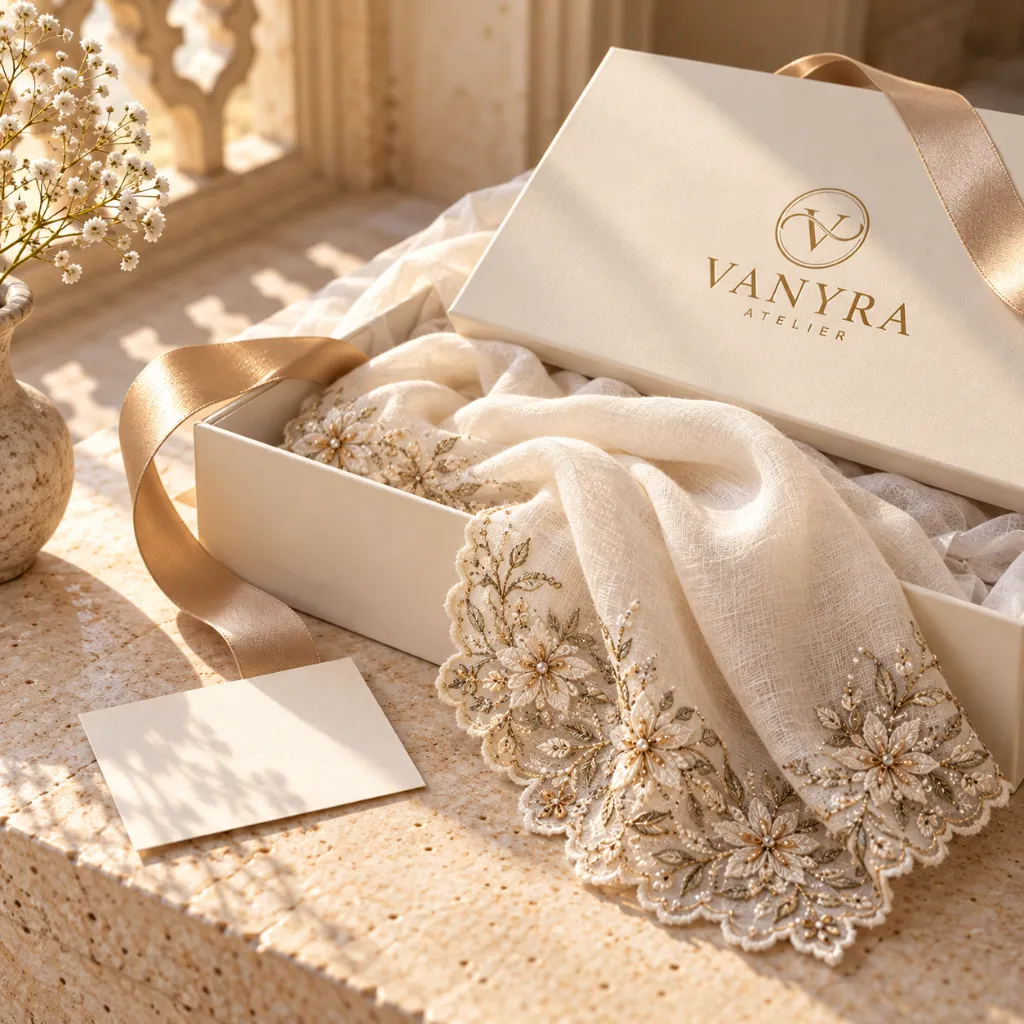
Zardozi Embroidery: What It Is and Why It Costs More
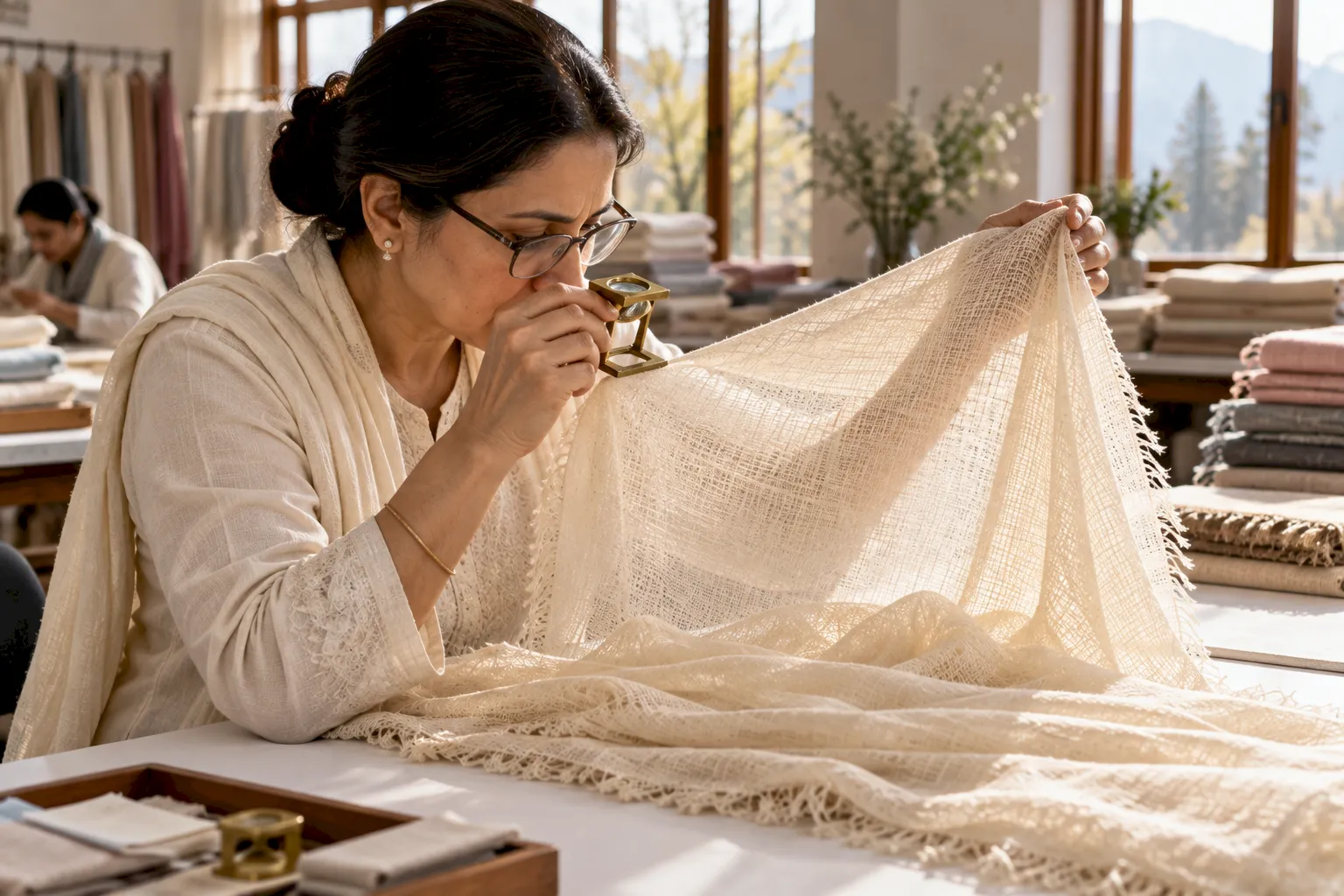
Few embroidery words carry as much weight, and as much potential for loose use, as Zardozi. This guide sets out what the technique actually involves, so a Zardozi label means something specific to you rather than functioning as a vague marker of luxury.
The Origins of Zardozi
Zardozi, from Persian words meaning roughly gold embroidery, has a history stretching back centuries, closely associated with royal courts across the Mughal era in India, where garments embroidered in real gold and silver thread signified status and occasion. While pure precious metal thread is rarely used today, replaced largely by metal-wrapped or metallic-coated thread, the technique's name and visual language still carries that historic association with opulence and ceremony.
How Zardozi Is Actually Made
Zardozi is worked using a hook needle called an aari, held beneath the fabric while the artisan guides metallic thread, sequins and sometimes small beads or stones into a design from above, building up a dense, often raised and textured surface. This is genuinely skilled, physically demanding work, often done with the fabric stretched tightly across a frame, and a single artisan may spend many consecutive days on one elaborate panel or border, depending on the density and intricacy of the design.
Why Zardozi Commands a Premium Price
The materials themselves cost more than plain embroidery thread. Metallic thread, sequins and any beading add direct material cost beyond a simple cotton or silk thread.
The labour involved is substantial and skilled. This is not a technique that can be meaningfully sped up without sacrificing quality, and skilled Zardozi artisans represent years of training in a specific, demanding craft.
Dense, elaborate designs take disproportionately longer. A lightly embellished border takes considerably less time than a fully covered, heavily worked panel, and price generally scales with the density and complexity of the actual embroidery, not just the overall garment size.
How to Spot Genuine Hand-Done Zardozi
Check the back of the fabric where possible. Hand Zardozi typically shows the thread and stitching anchored with visible, slightly irregular knots and thread ends on the reverse, while a printed or machine-applied imitation usually shows a flatter, more uniform reverse with little genuine thread penetration.
Feel for genuine texture and weight. Authentic Zardozi has real dimensional texture you can feel with your fingers, and a piece with substantial embroidery coverage will noticeably add weight to the fabric. A flat, smooth surface despite an apparently elaborate printed pattern is a sign of a printed imitation rather than genuine embroidery.
Look closely at sequin and bead attachment. Hand-stitched embellishment shows individual, slightly varied stitching securing each element, while a glued or machine-applied alternative tends to look more uniformly and mechanically placed.
Caring for Zardozi Embroidered Pieces
Zardozi embellishment is genuinely delicate despite its visually substantial appearance, and metallic thread in particular can tarnish or catch on other fabric if handled roughly. Professional dry cleaning by someone experienced with heavily embellished garments is strongly recommended over any form of home washing. Store a Zardozi piece flat or loosely folded, with the embroidered section protected from friction against other garments, and avoid hanging a heavily embellished piece for extended periods, since the weight of dense embroidery can stress and distort the base fabric over time.
Zardozi and Occasion: What It Is Actually Suited For
Given its historic association with ceremony and its genuinely substantial visual weight, Zardozi embroidery is most commonly seen on bridal wear, formal occasion sarees and lehengas, and similarly significant garments, rather than everyday pieces. If you are choosing a Zardozi-embroidered piece, it is generally intended as a statement piece for a meaningful occasion, and styling the rest of your outfit and accessories more simply around it tends to let the embroidery itself remain the visual focus.
A Note on Price and Authenticity
Given the genuine cost of skilled labour and materials behind authentic Zardozi, a dramatically low price for a claimed hand-done, densely embroidered piece is worth questioning specifically, a principle covered in more general terms in our guide to buying luxury accessories online safely. This does not mean every affordable embroidered piece is fraudulent, but a seller confident in genuine Zardozi work should be able to answer specific questions about technique and production time without evasiveness.
Zardozi's Place Within Indian Embroidery Traditions More Broadly
India has an extraordinarily rich landscape of regional hand embroidery traditions, each with its own history, technique and visual character, and Zardozi is just one, though one of the most visually opulent, among many. Understanding Zardozi specifically also helps when evaluating other named embroidery techniques you might encounter while shopping, since the same core principles, checking for genuine hand labour, understanding why skilled craft techniques command a real price premium, and asking specific rather than vague questions of a seller, apply broadly across these different traditions, including the more delicately toned Parsi Gara technique covered in our separate guide.
What a Genuinely Informed Buyer Should Expect From a Seller
A seller genuinely offering authentic Zardozi work should be comfortable describing specifically where the embroidery was done, roughly how long a piece of that complexity typically takes a skilled artisan to complete, and ideally something about the workshop or tradition the specific style of work comes from. This level of specific, confident detail is a meaningfully different thing from generic marketing language describing a piece simply as hand-embroidered luxury, and the distinction between the two is often the clearest signal of whether you are dealing with a seller who genuinely understands and stands behind the craftsmanship being sold.
A piece confidently and specifically described this way is generally a far safer purchase than one accompanied only by broad, enthusiastic marketing language with nothing concrete behind it.
Frequently Asked Questions
What exactly is Zardozi embroidery?
A traditional Indian metallic thread embroidery technique, historically associated with royal and ceremonial garments, using gold or silver-toned thread, sequins and sometimes beads, hand-stitched using a hook needle technique called aari work.
Why does genuine Zardozi cost so much more than other embroidery?
Both the metallic materials and the skilled, time-intensive hand labour genuinely cost more, and dense, elaborate designs can take a skilled artisan many consecutive days to complete.
How can I tell if Zardozi embroidery is hand-done rather than printed?
Check the reverse of the fabric for genuine thread penetration and slightly irregular hand stitching, and feel for real dimensional texture and added weight, both signs of authentic hand embroidery rather than a printed imitation.
What occasions suit a Zardozi-embroidered piece?
Given its historic association with ceremony and its substantial visual weight, Zardozi suits bridal wear, formal sarees and similarly significant occasions rather than everyday pieces.
How should Zardozi-embroidered garments be cleaned?
Professional dry cleaning by someone experienced with heavily embellished garments is strongly recommended, since home washing risks damaging the delicate metallic thread work.
Explore Hand-Embroidered Pieces
Browse our saree collection, and read our guide to Parsi Gara embroidery to compare this technique with another distinct Indian hand embroidery tradition.