How Much Does a Real Pashmina Shawl Cost?
Pashmina pricing is confusing partly because the word itself is used loosely across the market, as explained in our article on what pashmina actually is, and partly because the real cost drivers behind a traditional piece are not always visible from a product photo. This guide breaks down what genuinely affects pashmina pricing, so you can judge whether a specific price makes sense for what is being offered.
Why Genuine Pashmina Costs More Than Standard Cashmere
A traditional pashmina uses an especially fine grade of cashmere fibre, generally sourced from the Changthangi goat at high altitude, which produces less fibre per animal than other cashmere-producing breeds and requires more careful, often hand-based combing to collect. This finer, scarcer raw material already costs more than standard-grade cashmere fibre before any processing begins.
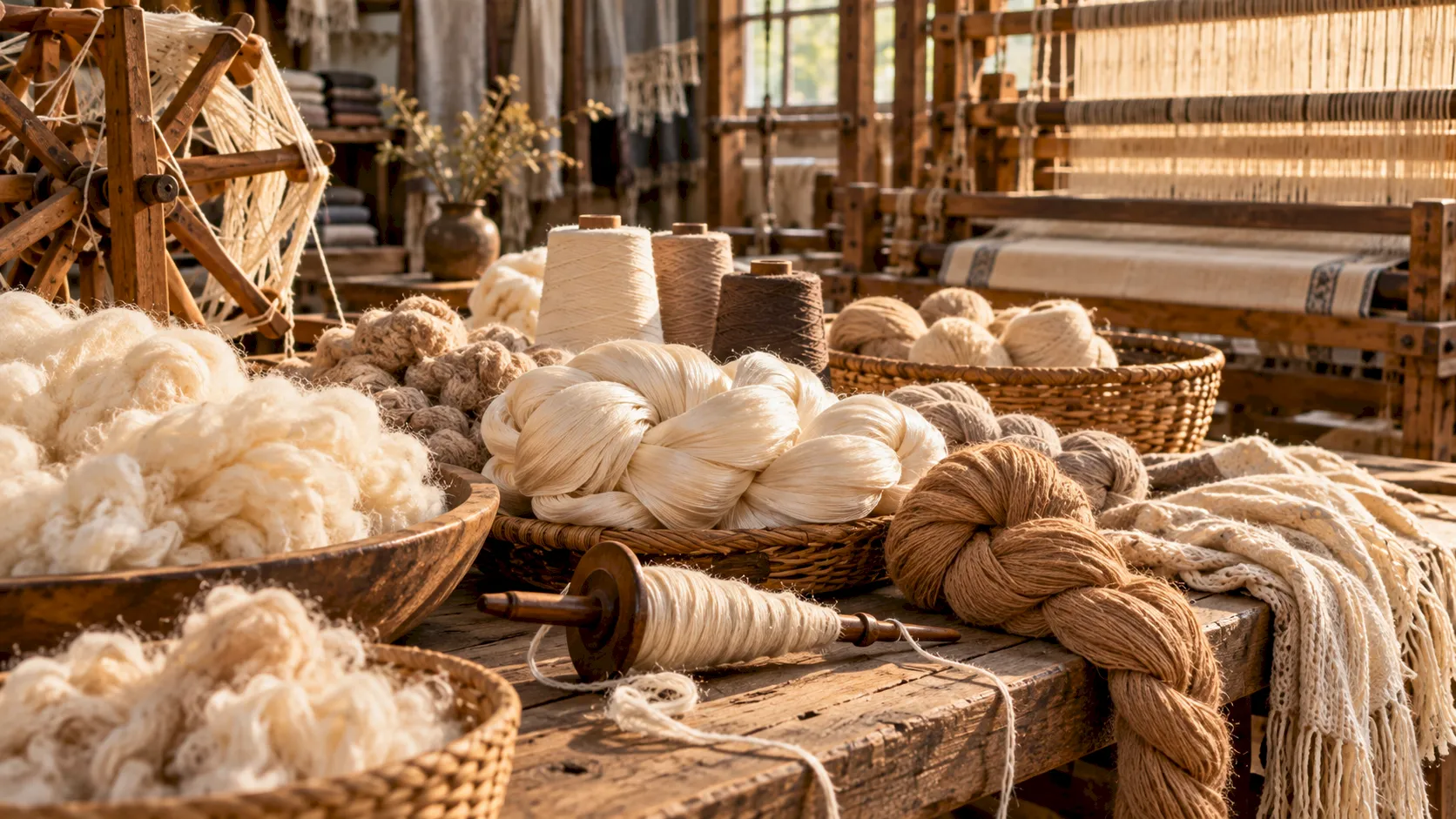
Beyond the raw fibre, traditional pashmina production historically involves hand-spinning the fibre into yarn, a slow, skilled process that a single spinner can only produce a limited quantity of in a day, and hand-weaving on a traditional loom, which is similarly slow compared with mechanised weaving. Each of these factors adds real cost, reflecting genuine time and skilled labour rather than simply brand positioning or markup.
What Drives Price Within the Pashmina Category Itself
Fibre fineness and grade. Even within pashmina specifically, fibre grade varies, and a finer, more consistent grade commands a higher price than a coarser grade still accurately described as pashmina.
Hand-spun versus machine-spun yarn. A genuinely hand-spun pashmina involves considerably more labour than a piece using machine-spun cashmere yarn woven on a traditional loom, and this is reflected in price, even though both might reasonably be described using similar language depending on how strictly the seller applies the term.
Weave complexity. A simple, plain weave pashmina costs less to produce than an intricately patterned one, such as a traditional jamawar-style weave incorporating complex, often colourful motifs, which requires considerably more time and skill at the loom.
Embroidery and embellishment. Hand-embroidered pashmina shawls, a traditional craft in their own right, add substantial additional labour and cost beyond the base woven piece, scaling with the density and intricacy of the embroidery.
Size. A larger shawl requires proportionally more fibre and more weaving time than a smaller scarf-format piece, which affects price in a fairly direct, linear way.
Why Prices Vary So Widely Across Sellers
Because pashmina sourcing and production sit across a long, often fragmented supply chain, from goat herders and fibre collectors through spinners, weavers, finishers and various intermediaries before reaching a retailer, the final price a customer sees can vary enormously depending on how many of those steps a given seller is involved in directly, and how many intermediary margins sit between production and sale. A seller buying directly from weavers or weaving cooperatives, with fewer intermediaries, can often offer a lower price for comparable genuine quality than a seller purchasing through several layers of distribution, a dynamic discussed more generally in our article on buying direct from an atelier versus a department store.
Why an Extremely Low Price Is Worth Questioning
Given the genuine labour and fibre costs behind a traditional pashmina, a price dramatically lower than comparable pieces claiming the same fibre content, fineness and hand-production should prompt a specific question rather than automatic rejection: is the piece actually machine-spun and machine-woven rather than hand-made, is the fibre content genuinely 100 percent pashmina-grade cashmere or a lower grade or blend, and does the seller state these details specifically or only in general marketing language. A seller confident in their own production should be able to answer these questions clearly.
How to Judge Whether a Price Is Fair for What Is Offered
Rather than asking whether a price is objectively high or low in isolation, it is more useful to ask whether the price is consistent with the specific claims being made: stated fibre content, stated production method, hand-spun versus machine-spun, stated weave complexity, and stated size. Comparing prices across sellers making genuinely comparable specific claims is far more informative than comparing prices alone without checking whether the underlying claims actually match.
What You Are Paying for With a Hand-Embroidered Piece Specifically
Hand embroidery on a pashmina shawl, often in traditional regional styles developed over generations, represents a distinct craft skill on top of the weaving itself, and pieces with extensive, fine hand embroidery can command a substantial premium over a plain woven pashmina of the same base size and fibre grade. If embroidery is a major part of what you are paying for, it is worth asking specifically whether it is hand-done or machine-embroidered, since this affects both authenticity and price considerably.
A Reasonable Approach to Budgeting for a Genuine Piece
Rather than fixing on a single target price in advance, it is more useful to decide which specific factors matter most to you, fibre fineness, hand-spinning, weave complexity, embroidery, size, and then compare prices among sellers making similar specific claims across those factors. This gives you a meaningful basis for judging value, rather than comparing an arbitrary number against an equally arbitrary expectation.
How Authenticity Testing Relates to Price Confidence
Because genuine pashmina relies heavily on seller claims that are difficult for a buyer to independently verify, some regions and certification bodies have introduced testing and labelling schemes intended to confirm genuine pashmina fibre content and origin. Where such a certification is present and verifiable, it can add real confidence to a price that otherwise might seem simply asserted by the seller. Where no certification exists, which is common for many smaller, genuinely artisanal sellers who may not pursue formal certification due to cost or scale, the specific, detailed claims discussed throughout this guide, fibre grade, hand-spinning, weave complexity, remain the most practical way to judge whether a price is justified.
Why We Price Our Own Cashmere the Way We Do
We price our hand-loomed cashmere pieces based on the actual fibre grade used, the specific weave and construction, and the genuine hand labour involved in production, rather than using the word pashmina as a pricing lever on its own. We think this is a more honest basis for pricing than relying on a word that has become diluted through overuse elsewhere in the market, and it means a customer comparing our stated price against our stated specifics has a fair basis for judging value, rather than comparing against a word alone.
Frequently Asked Questions
Why is a genuine pashmina shawl so much more expensive than a regular scarf?
It uses an especially fine, scarcer grade of cashmere fibre and, traditionally, involves slow, skilled hand-spinning and hand-weaving, both of which add substantial real labour cost compared with machine production using standard-grade fibre.
Does hand embroidery significantly increase the price of a pashmina?
Yes, often considerably, since hand embroidery is a separate, skilled craft requiring substantial additional time, scaling with the density and intricacy of the design.
Why do pashmina prices vary so much between different sellers?
Because the supply chain from fibre collection through spinning, weaving and retail can involve varying numbers of intermediaries, each adding their own margin, which significantly affects the final price for comparable quality.
Should I be suspicious of a very cheap "genuine pashmina"?
It is reasonable to ask specific questions: is the fibre content genuinely as stated, and is the piece actually hand-spun and hand-woven. An extremely low price relative to comparable claimed pieces is a signal to verify, not necessarily evidence of fraud.
What is the best way to compare prices across different pashmina sellers?
Compare prices only among sellers making similarly specific claims about fibre content, production method and weave complexity, rather than comparing price alone without checking whether the underlying claims genuinely match.
Explore Our Pashmina-Grade Cashmere
Browse our cashmere collection, hand-loomed using traditional techniques, or read our craftsmanship story to understand exactly what goes into each piece.