Cashmere Scarf Price Guide: What Actually Drives the Cost
One of the most common questions before buying cashmere is simply: is this a fair price? It is a reasonable question, because cashmere pricing varies more than almost any other natural fibre product, and the reasons are not always visible on a product page. This guide breaks down what actually drives the cost of a cashmere scarf, so that when you compare two prices, you understand what you are actually comparing.
Why Cashmere Costs More Than Other Fibres to Begin With
Cashmere comes from the fine undercoat of cashmere goats, combed by hand during a short shedding season each year, rather than shorn in bulk the way sheep's wool is. A single goat produces only a small amount of usable fibre annually. That scarcity, combined with the labour involved in combing and sorting it from coarser guard hair, sets a cost floor that applies before any scarf is even woven. This is true industry-wide, not specific to any one seller, and it is the first thing to understand before comparing prices.
Fibre Content: Pure Cashmere vs Blends
The single biggest price driver on a product page is the fibre content. A scarf described as 100 percent cashmere will generally cost more than a scarf blended with wool, viscose or synthetic fibres, because less of the more expensive fibre is used. Blends are not inherently dishonest or poor quality; a well-made blend can offer good value and added durability. But the price difference between pure cashmere and a 30 percent cashmere blend should be substantial, and if it is not, something does not add up. Always check the stated fibre percentage rather than assuming from the word cashmere alone.
Fibre Grade and Micron Count
Within pure cashmere, fibre fineness varies, measured in microns. A finer fibre feels noticeably softer and drapes more fluidly, and it generally costs more to source because fine fibre is rarer within any given harvest. Sellers do not always state micron count on a product page, since it is a technical detail most casual buyers do not ask about, but if you are comparing two similarly priced pure-cashmere pieces and one feels noticeably softer in photographs or in person, fibre grade is often the explanation. Our glossary on the language of cashmere explains micron count and related terms if you want to go deeper.
Ply and Yarn Construction
Ply refers to how many spun strands are twisted together to make the yarn. A single-ply yarn is lighter and often softer, while a two-ply yarn tends to be more durable and structured. Construction choices like this affect both the price and the character of the finished piece, and neither is objectively better; they suit different purposes. A heavier, more structured two-ply shawl intended for daily wear may reasonably cost more in materials than a feather-light single-ply piece intended for occasional, delicate use, even at the same fibre grade.
Hand-Loomed and Hand-Finished Work Costs More Than Machine Production
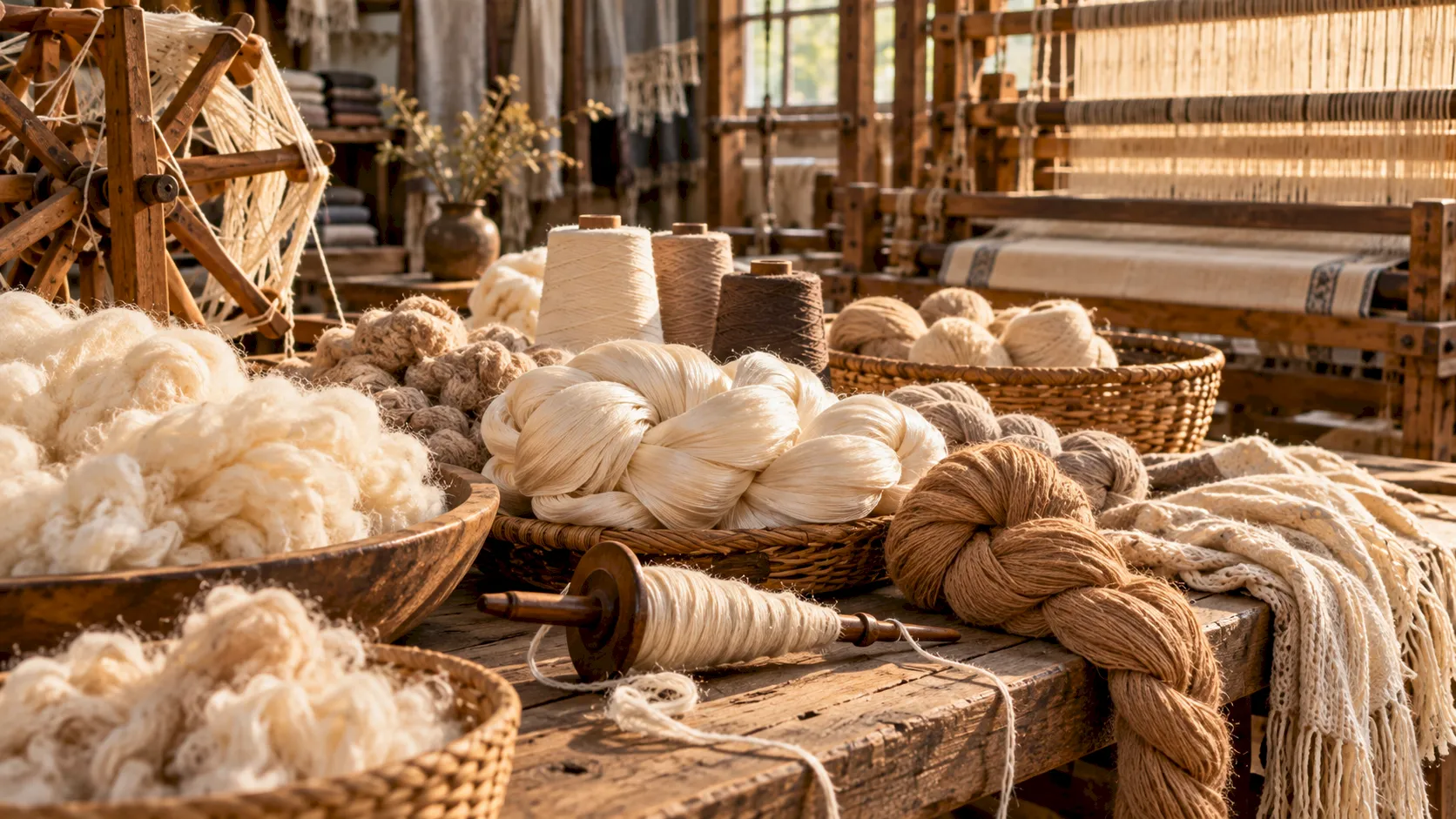
This is often the largest and least visible price driver of all. A hand-loomed piece, woven by a person controlling tension and pace by hand, takes substantially longer to produce than a piece made on a powered, automated loom. Hand finishing, fringes, edges and any embroidery completed by hand rather than by machine, adds further time and skill. This labour is a real cost, not a marketing premium, and it is one of the main reasons two scarves that look similar in a photograph can be priced very differently. Our article on handloom versus powerloom fabric explains this distinction if you want to understand what you are paying for when a seller describes a piece as hand-loomed.
Embellishment and Personalisation
Embroidery, beading, hand-finished edges, and any personalisation such as a monogram, all add cost proportional to the time they take to complete by hand. A plain, unembellished scarf in the same fibre and weave as an embroidered one will generally cost less, simply because less hand labour went into it. If you are considering a personalised piece, our personalisation page explains the kind of bespoke work available and how pricing is quoted individually for custom commissions.
What an Unusually Low Price Usually Means
If a price seems too good to be true relative to others claiming the same fibre content, it is worth being sceptical. Common explanations include a heavier blend than stated, a lower fibre grade than typical for the category, or construction that has cut corners in finishing, such as machine-overlocked edges sold as hand-finished. None of this means every low-priced scarf is misrepresented, but it does mean the burden of proof shifts to the seller to explain what you are actually getting for that price.
What a Fair Price Reflects
A fair price for a genuine, well-made cashmere piece reflects:
- The fibre content stated accurately, whether pure cashmere or a clearly disclosed blend.
- The fibre grade, even if not stated explicitly, inferred from how the piece is described and photographed.
- Construction and ply, which affects weight, durability and feel.
- Whether the piece is hand-loomed and hand-finished, which adds real labour cost.
- Any embellishment or personalisation, priced proportionally to the work involved.
How to Compare Prices Sensibly
Rather than asking whether a price is objectively high or low, ask whether it is consistent with what is actually being claimed. Two pieces both described as 100 percent cashmere, hand-loomed and hand-finished, should be in a broadly similar range; if one is dramatically cheaper, something in that description is probably not accurate. Conversely, a machine-made blend will reasonably cost less than a hand-loomed pure cashmere piece, and that price gap is not a sign that the cheaper piece is a rip-off; it reflects a genuinely different product.
Frequently Asked Questions
Why do two cashmere scarves that look identical have very different prices?
The visible appearance of a scarf in a photograph does not show fibre grade, ply, blend ratio or whether it was hand-loomed or machine made, all of which affect price substantially. Differences that are invisible in a photo can still justify a large price gap.
Is a more expensive cashmere scarf always better?
Not automatically, but price differences should correspond to real factors like fibre grade, construction and hand work. A price with no clear justification, in either direction, is worth questioning.
Does hand-loomed cashmere really cost more to produce?
Yes. Hand weaving and hand finishing take substantially longer than automated production, and that labour is a genuine cost, not simply a marketing premium.
What does it mean if a cashmere scarf is unusually cheap?
It often means a lower fibre grade, a heavier blend with other fibres than is clearly disclosed, or finishing that has cut corners. It is worth checking the stated fibre content carefully before buying.
Should I avoid cashmere blends altogether?
Not necessarily. A clearly disclosed blend can offer good value and added durability. The issue is not blends themselves, but blends that are not disclosed accurately.
Explore Our Collection
See how fibre, construction and hand finishing come together in our cashmere collection, or read about how our pieces are made by hand in the atelier.