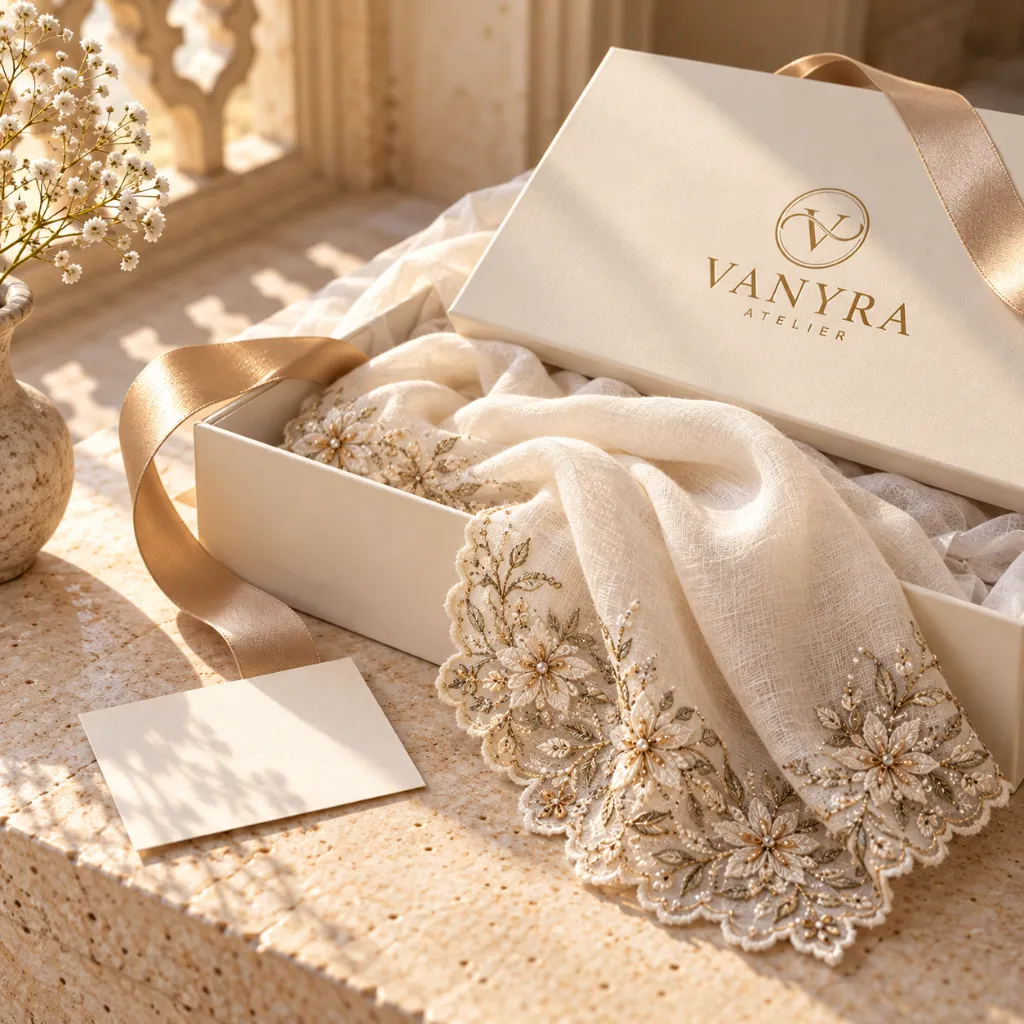
Handloom vs Powerloom: What Makes Handwoven Fabric Different
The handloom vs powerloom question sits at the centre of how textiles are made and valued in India. Both produce woven cloth. Both can be beautiful. But they are made in very different ways, at very different speeds, and the differences show up in how the fabric looks, feels, wears and is priced. If you are buying a shawl, a scarf or a wrap, understanding the distinction helps you decide what you are paying for and whether it is worth it to you.
This guide explains what each loom does, how to recognise handwoven cloth, what the real advantages and limits of each are, and why so many people who love natural fibres seek out handloom pieces. It draws on the traditions we work within at VANYRA ATELIER, where each piece is hand-loomed and hand-finished in India. For a look at the making itself, see how a handloomed shawl is made.
What Is a Handloom?
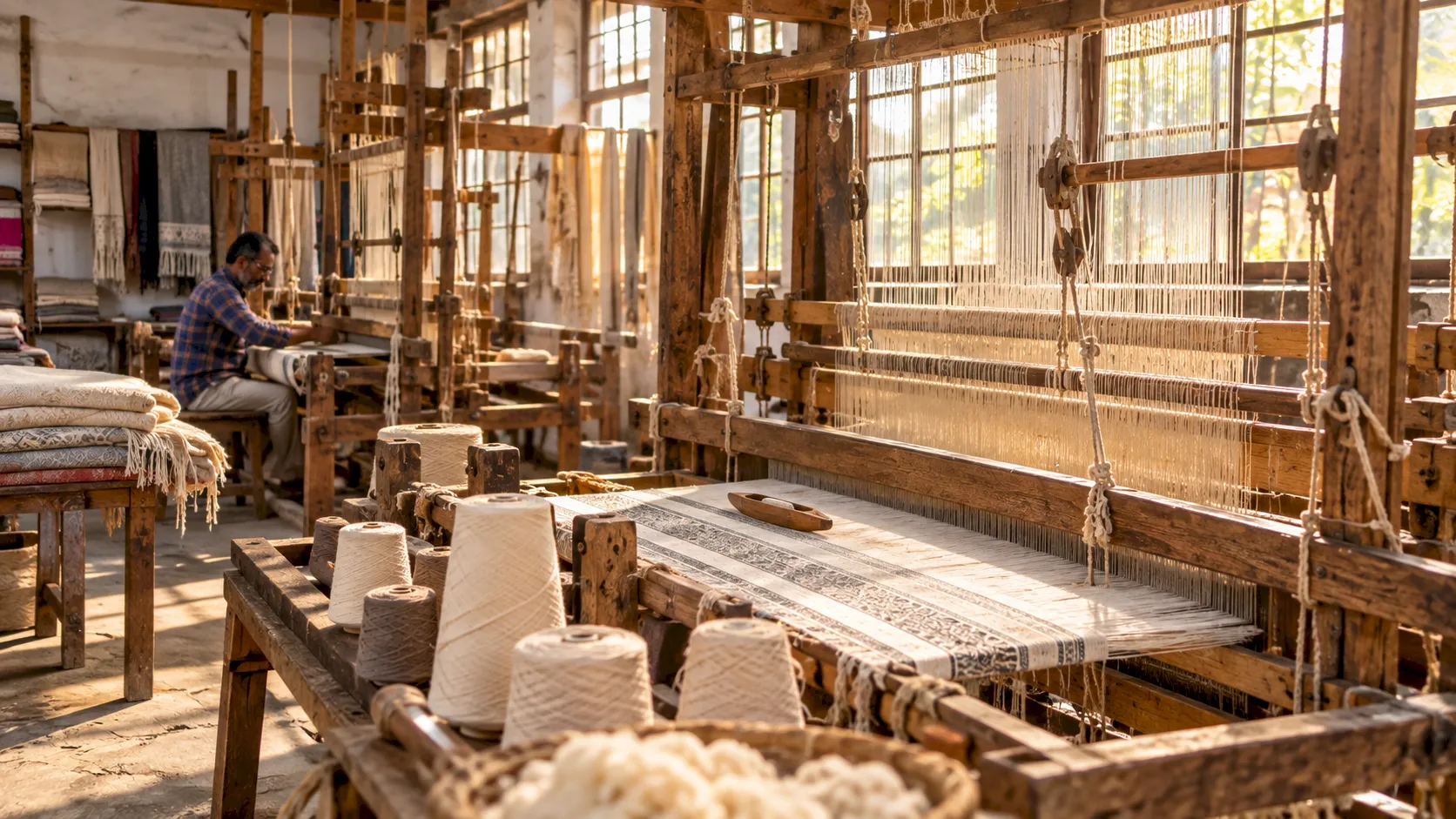
A handloom is a weaving frame operated entirely by human effort, without electric power. The weaver controls the tension of the threads, throws the shuttle that carries the weft across, beats it into place and moves the pedals or levers that lift the warp threads to create the pattern. Every pass of the shuttle is a decision made by hand and eye.
Weaving is the interlacing of two sets of threads: the warp, which runs lengthwise and is fixed to the loom, and the weft, which crosses it. The way these threads interlace, called the weave, decides the fabric's structure. Plain weave, twill and more complex patterns can all be made on a handloom, and the finest patterned shawls of Kashmir were woven on looms operated by highly skilled craftspeople.
Because a person sets the pace, the work is slow. A single fine shawl can take many hours or days depending on the yarn, the width and the complexity. That slowness is not an inefficiency to be engineered out. It is part of what gives handloom cloth its character.
What Is a Powerloom?
A powerloom does the same basic job, interlacing warp and weft, but is driven by electricity. Mechanical or electronic systems throw the shuttle, beat the weft and lift the warp at high speed. A powerloom can produce metres of consistent fabric in the time a handloom produces a fraction of that.
Powerlooms are not inherently bad. They make cloth affordable and consistent, and modern machines can weave very fine, precise fabric. They also employ many people and underpin much of the textile industry. The issue arises when machine-made fabric is presented as handwoven, or when a machine's speed is allowed to override the care that soft, fine fibres deserve.
Handloom vs Powerloom: The Key Differences
Speed and scale
A handloom weaves slowly and produces small quantities. A powerloom weaves quickly and at scale. This is the main reason handloom cloth costs more: it embodies more human time per metre.
Tension and fibre handling
Fine natural fibres, especially cashmere and silk, are delicate. A weaver working by hand feels the tension in the threads and adjusts continuously, easing off where a yarn is fragile. High-speed machines apply steadier, higher tension, which is fine for strong yarns but can stress very fine ones.
The result is that handwoven cashmere often has a softer, more relaxed hand, meaning the way the fabric feels when touched and folded. It tends to drape more loosely and feel less compressed.
Consistency and character
Powerloom fabric is uniform. Every metre looks like the last. Handloom fabric carries tiny irregularities: a slight variation in beat, a marginal shift in density. These are not defects. They are the signature of human work, and many people value them precisely because no two pieces are exactly alike.
Selvedge and edges
The edge of a woven fabric, called the selvedge, is formed as the weft turns at the side of the cloth. On a handloom, the edges can be finished with great care, and fringes are often twisted or knotted by hand afterwards. Machine-woven fabric usually has a flatter, more uniform edge, and fringes are typically cut or machine-finished.
Cost
Handloom pieces cost more because labour is a larger part of the price and output is smaller. Powerloom pieces cost less because the cost per metre is lower. Neither number is meaningful without knowing the fibre, weight and finish that comes with it.
Environmental footprint
A handloom uses no electricity for weaving. It also encourages a smaller production scale and, often, longer-lasting products. That said, the environmental impact of a textile depends far more on the fibre, dyeing and how long the piece is worn than on the loom alone. See our thoughts on sustainable luxury and natural fibres.
How to Tell Handloom From Powerloom
There is no single definitive test, and the most reliable proof is provenance: a maker who can show you how and where the piece was made. But several clues help.
- Look at the weave closely. Handloom cloth shows very slight variations in density and thread spacing. Powerloom cloth looks perfectly regular.
- Check the edges and fringes. Hand-twisted or hand-knotted fringes, and edges that show small variations, suggest hand finishing.
- Feel the drape. Handwoven fine fibres usually feel looser and softer than tightly beaten machine cloth.
- Ask about the process. A genuine maker will describe the loom, the weaver and the finishing steps without hesitation.
- Look for authenticity marks where they exist. In India, several handloom products carry official handloom marks or geographical indications, and these can help verify origin. Check the current scheme details before relying on any mark.
- Be wary of vague claims. "Handcrafted" and "artisan-made" are unregulated in many contexts. Ask for specifics.
Why Handloom Textiles Matter Culturally
India has one of the oldest and richest handloom traditions in the world. Weaving communities across the country have developed distinct regional styles, from the fine shawls of Kashmir to the silks of the south and the east. Handloom weaving supports the livelihoods of a large number of families, many of whom have practised the craft for generations.
When people buy handloom pieces, they support the continuation of that knowledge. A weaver's skill takes years to develop and is passed down through practice. If demand disappears, the skill can disappear with it. Our piece on the history of the Indian shawl traces how deeply woven into Indian life these traditions are.
Does Handloom Fabric Last Longer?
Not automatically. Durability depends on the fibre, the yarn and the weave. A well-woven powerloom fabric from good yarn can outlast a loosely woven handloom piece from weak yarn. What handloom weaving offers is care: a person who can see and feel the fabric as it forms and correct problems before they become part of the cloth.
In our experience, the qualities that make handloom cashmere last are the same as for any cashmere: long, fine fibre, well-spun yarn, a balanced weave and careful finishing. Read more in our guide to cashmere quality, and see how to look after your piece in how to care for cashmere.
Handloom Pieces to Look At
At VANYRA ATELIER, each piece is hand-loomed and hand-finished in India. You can see the approach in our craftsmanship section and in Inside the Atelier: A Weaver's Hands. To see finished pieces, look at the Golden Peach pure cashmere shawl, the Forest Moss cashmere wrap or the Midnight Weave merino wool shawl.
Should You Choose Handloom?
Choose handloom if you value softness and drape, if you want a piece with individual character, if you care about supporting traditional craft, or if you are choosing something to keep and pass on. Handloom pieces suit heirloom shawls, special gifts, wedding presents and any piece you plan to wear for decades.
Choose powerloom if you need very uniform fabric, a lower price, or large quantities of identical items. There is nothing wrong with well-made machine-woven cloth. The important thing is honesty: buy from a seller who tells you which is which. If you are a business looking for bespoke or private-label textiles, see our trade and wholesale page.
Frequently Asked Questions
What is the difference between handloom and powerloom?
A handloom is operated entirely by hand and without electricity, giving the weaver direct control over tension and pace. A powerloom is driven by electricity and weaves much faster and more uniformly.
Is handloom fabric better than powerloom fabric?
Handloom fabric is not automatically better, but it is different. It often feels softer and more relaxed and carries small individual variations. Powerloom fabric is more uniform and usually cheaper.
Why are handloom shawls more expensive?
Handloom weaving takes far more human time per piece, produces smaller quantities and relies on skilled labour. Hand finishing of edges and fringes adds further time.
How can I be sure a shawl is really handwoven?
Look for irregularities in the weave, hand-finished fringes and clear information from the seller about where and how it was made. Official handloom marks and geographical indications, where they apply, can help verify origin.
Does handloom cashmere pill less?
Pilling depends mostly on fibre length, yarn quality and construction. Handloom cashmere from long, well-spun fibre pills less than cloth from short fibre, whichever loom is used. See our guide on why cashmere pills.
Choose Something Made by Hand
A handwoven piece is a record of the time and skill that went into it. Explore the VANYRA ATELIER collection, read about our house and values, or contact us if you would like to know more about how a particular piece was made.