Silk: Origins and Character
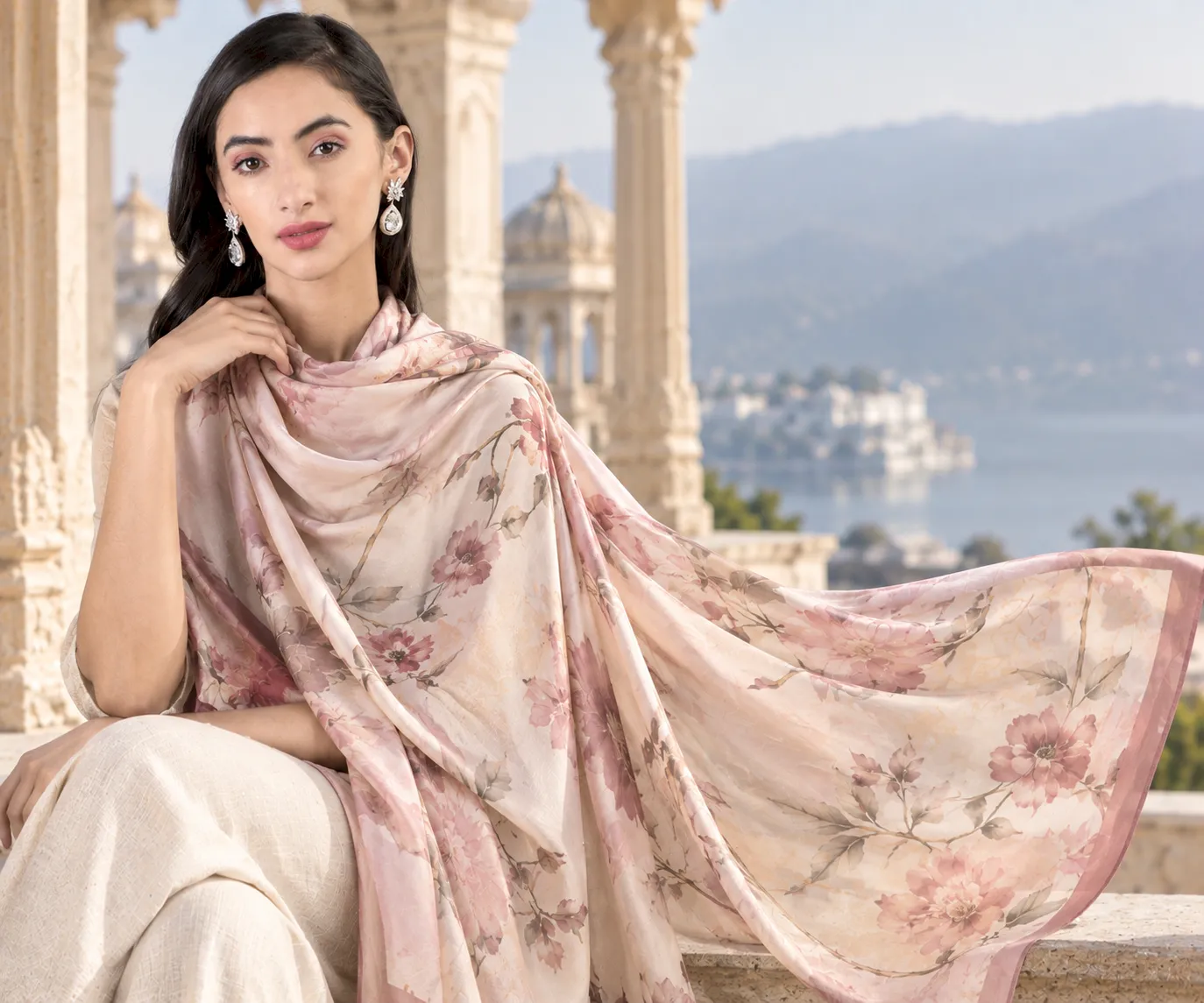
Of the three fibres we work with, silk is the one most defined by light. Cashmere is defined by softness and warmth, merino wool by resilience and structure, and silk by the way it catches and reflects light as it moves. That quality, more than any other, is what people respond to when they first hold a piece of silk.
This article looks at where silk comes from, what gives it its particular character, and how that character shows up in a finished scarf, wrap or throw.
Where Silk Comes From
Silk is produced by silkworms, the larvae of the silk moth, as they spin cocoons. The fibre is a continuous protein filament, and it is this continuous structure, rather than the shorter, overlapping fibres of wool or cotton, that gives silk its distinctive smoothness and shine.
There are several types of silk, distinguished mainly by which silkworm produces them and what they are fed. Mulberry silk, produced by silkworms fed exclusively on mulberry leaves, is the most widely used and the type associated with the fine, even, lustrous silk most people picture. Other types, sometimes called wild silks, are produced by silkworms feeding on different plants and tend to have a coarser, more textured character.
Turning cocoons into usable thread involves careful unwinding of the continuous filament, then spinning it into yarn ready for weaving. This is a skilled process, and the quality of the raw filament sets a ceiling on how fine the finished thread can be.
What Gives Silk Its Character
Several qualities distinguish silk from other natural fibres, and together they explain why it is chosen for particular kinds of pieces.
Sheen
Silk fibre has a naturally smooth, almost triangular cross-section at a microscopic level, which allows light to reflect off it at different angles as the fabric moves. This is what produces silk's characteristic shine, sometimes called sheen or lustre. No other common natural fibre reflects light quite the same way, which is why silk pieces look different depending on how the light falls and how the fabric moves.
Drape
Silk fabric tends to be light in weight relative to its density, and it falls in soft, fluid folds rather than holding a stiff shape. This quality, called drape, is one reason silk scarves and wraps are chosen for occasions where how a piece moves matters as much as how it looks when still.
Strength for its weight
Despite its lightness, silk is a comparatively strong natural fibre for its weight, which is part of why very fine, sheer silk fabrics can still hold together well and last for years with proper care.
Temperature regulation
Silk is a natural insulator that also breathes, which means it can feel comfortable in a range of temperatures rather than being purely warm or purely cool. This is different from cashmere, which is chosen specifically for warmth, or from lightweight cotton, which is chosen mainly for coolness. Our guide to is silk warm looks at this in more detail if you are deciding whether silk suits a colder season.
Momme weight
Silk fabric weight is measured in a unit called momme, and it tells you roughly how dense and substantial a silk fabric is. A lower momme weight generally means a lighter, more sheer fabric, better suited to warm-weather scarves or delicate wraps. A higher momme weight means a heavier, more substantial fabric with more structure. Momme is worth checking if you are choosing between two silk pieces that look similar but feel different in the hand.
How Silk Is Woven by Hand
Like our cashmere and merino wool pieces, our silk textiles are woven by artisan communities practising techniques refined over generations, rather than produced entirely on industrial machinery. Hand weaving with silk asks for particular care, because the fine, smooth filament shows every irregularity in tension more visibly than a coarser fibre would. A weaver working with silk has to be especially attentive, which is part of why the finished cloth has the fluid, even quality it does.
You can read more about how hand weaving generally differs from machine production in our article on handloom versus powerloom fabric.
Choosing and Caring for Silk
Silk suits pieces where light, movement and occasion matter: a scarf for a formal event, a wrap for an evening out, or a throw chosen as much for its visual richness as for warmth. If you want guidance on how to wear a silk scarf specifically, our article twelve easy ways to tie a silk scarf is a practical companion to this one.
Silk is more delicate than cashmere or merino wool in some respects, particularly its sensitivity to direct sunlight over long periods and to moisture. Dry cleaning is recommended for our silk pieces, and they should be stored away from prolonged direct light and away from damp conditions. Always follow the specific care label on the piece you own.
Silk Alongside Other Natural Fibres
Silk is sometimes blended with cashmere or wool to combine qualities: the sheen and drape of silk with the warmth of another fibre. Where we do this, the fibre content is stated clearly, since a blend is a deliberate design choice, not a way of substituting a lesser fibre. If you are deciding between fibres more generally, our comparison of cashmere versus merino wool may also help you think through what matters most for your own use.
Frequently Asked Questions
What is mulberry silk?
Mulberry silk is produced by silkworms fed exclusively on mulberry leaves. It is the most common and generally the finest type of silk, known for its even, lustrous filament.
What does momme mean?
Momme is the unit used to measure the weight and density of silk fabric. A lower momme weight means a lighter, more sheer fabric, and a higher momme weight means a heavier, more substantial one.
Is silk warm enough for winter?
Silk offers some natural insulation and breathes well, but it is generally chosen for its drape and sheen rather than for warmth alone. For a fuller answer, see our article on whether silk is warm.
Why does silk feel different depending on the light?
Silk fibre has a smooth, faceted structure at a microscopic level that reflects light at different angles as the fabric moves, which produces its natural sheen.
How should I care for a silk scarf or wrap?
Dry cleaning is recommended, and silk should be kept away from prolonged direct sunlight and damp conditions. Always check the specific care label on your piece.
Explore Silk at VANYRA ATELIER
See the fibre in our silk collection, browse scarves, wraps and throws, or read about how our pieces are hand-loomed.