Embroidered Shawls: What to Look For
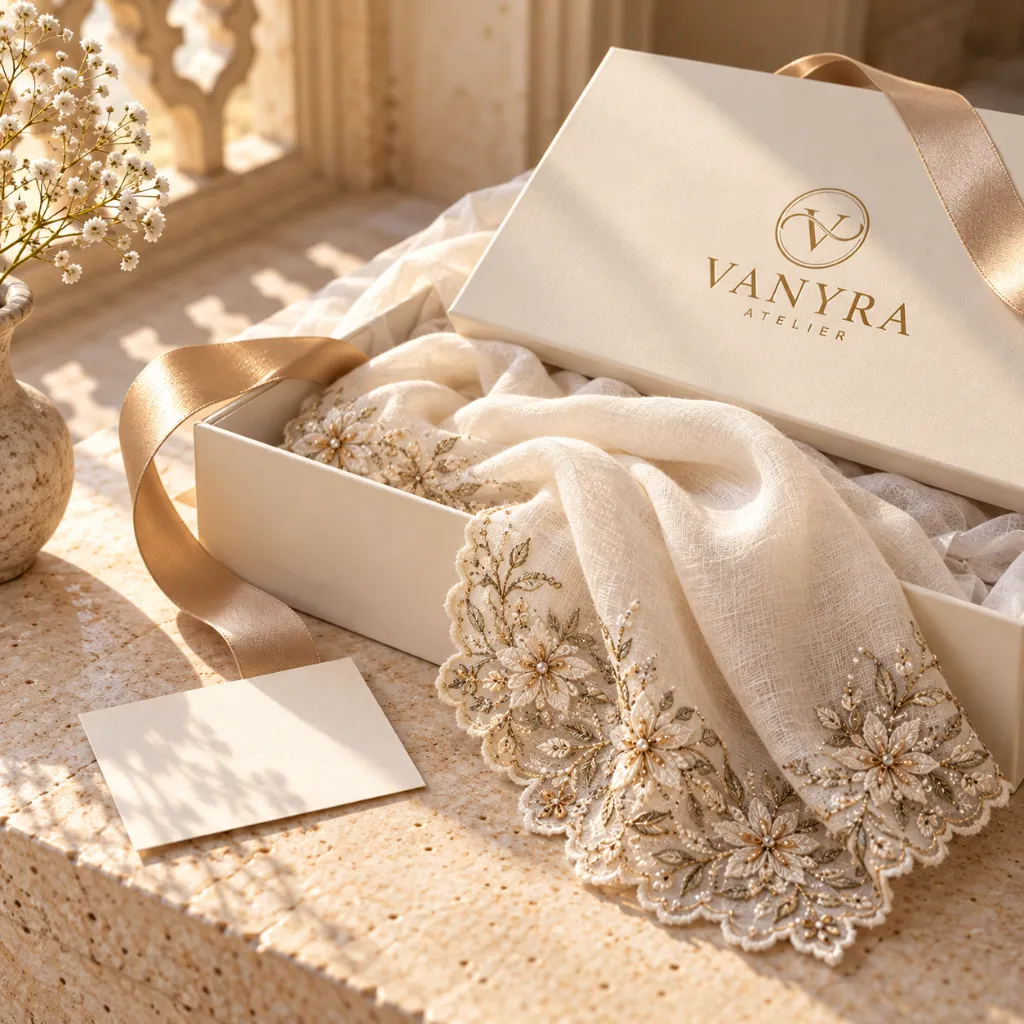
An embroidered shawl is a more complex purchase than a plain piece, since you are evaluating two things at once: the quality of the base fabric and the quality and authenticity of the embroidery itself. This guide sets out what actually matters in each.
Start With the Base Fabric, Not the Embroidery
It is tempting to focus entirely on an embroidered shawl's decorative pattern, but the underlying fabric quality matters just as much as it would in an unembellished piece. A beautifully embroidered design on a thin, poorly woven base fabric is still a disappointing purchase overall. Evaluate the base fibre and weave using the same principles covered in our guide to spotting a high-quality luxury scarf before letting the embroidery itself sway your decision.
Hand Embroidery Versus Machine Embroidery
Genuine hand embroidery shows real, if subtle, variation between individual stitches when examined closely, since no two hand-made stitches are produced with perfectly identical machine precision. Machine embroidery, by contrast, tends to show a very uniform, mechanically repeated stitch pattern. Neither is inherently fraudulent, since well-made machine embroidery has its own place in the market at a correspondingly lower price point, but a seller claiming hand embroidery while actually using machine work is a meaningful misrepresentation worth checking for, a concern covered more generally in our guide to buying luxury accessories online safely.
Checking the Reverse Side
One of the most reliable ways to judge embroidery quality and authenticity is to examine the back of the fabric, where the construction is harder to disguise. Genuine, well-executed hand embroidery typically shows clean, secured thread ends and a reasonably neat reverse, even if not as polished as the front. A reverse that looks tangled, loosely secured, or shows thread pulling through unevenly suggests rushed or lower-quality work, regardless of how the front appears.
Design Density and Placement
Embroidery can range from a delicate border detail to a design covering the majority of the shawl's surface, and both are legitimate choices reflecting different traditions and price points, discussed specifically in our guides to Zardozi and Parsi Gara embroidery. What matters more than density alone is whether the placement feels considered, whether a border design follows the shawl's edge cleanly and consistently, or whether an allover pattern maintains even density and spacing across the full piece, rather than appearing rushed or unevenly distributed in places.
Thread Quality and Colour Fastness
The thread used in embroidery, whether silk, metallic or another fibre, should feel consistent with the overall quality of the piece. Silk embroidery thread should have a genuine, visible sheen rather than looking dull or synthetic. If the shawl has been dyed in multiple colours as part of the embroidered design, check, where possible, whether the colours appear genuinely fast and unlikely to bleed, since embroidery thread that bleeds into the surrounding base fabric during cleaning can permanently damage an otherwise beautiful piece.
Weight and Drape: Does the Embroidery Overwhelm the Fabric
Dense, heavy embroidery adds real weight to a shawl and can affect how it drapes compared with the same base fabric unembellished. This is not necessarily a flaw, since many embroidered pieces are specifically intended for more structured, occasion-focused draping rather than the fluid movement of a lighter, plainer piece, but it is worth being aware of before buying if you specifically want a shawl that moves and drapes with the lightness typical of fine cashmere or silk alone.
Caring for an Embroidered Shawl
Embroidery, particularly hand embroidery using silk or metallic thread, is generally more delicate than the base fabric alone and is rarely suited to home washing. Professional dry cleaning by someone experienced with embellished garments is strongly recommended, following similar principles to those covered in our guide to storing a silk scarf properly, with particular care taken to protect the embroidered sections from friction and pressure during storage.
Price and What It Should Reflect
An embroidered shawl's price should reflect both the base fabric quality and the embroidery's complexity, technique and authenticity, as discussed in general terms in our cashmere pricing guide. A dramatically low price for a claimed densely hand-embroidered piece in a fine base fibre is worth questioning specifically, since the genuine labour behind quality hand embroidery is a real, substantial cost that cannot be meaningfully shortcut without affecting the final result.
Matching Embroidery Style to Occasion
Different embroidery traditions suit genuinely different occasions, and it is worth choosing deliberately rather than simply by visual appeal alone. A bold, metallic Zardozi design, covered in our dedicated guide, suits formal and bridal occasions where a substantial visual statement is appropriate. A more delicate, tonal Parsi Gara design, covered in its own guide, suits a slightly more understated formal context, elegant without being overtly opulent. A simpler border embroidery, with embellishment concentrated along the edges rather than covering the whole piece, suits a broader range of smart-casual occasions where you want some embroidered detail without the shawl becoming an obvious formal statement piece.
Building an Embroidered Piece Into a Broader Collection
An embroidered shawl, given its typically higher price point and more occasion-specific character, is generally better suited as a considered addition to an existing collection of simpler, more everyday pieces, rather than a first or only shawl purchase. If you are still building your core collection of versatile, everyday pieces, our guide to how many scarves you actually need is worth reading first, with a genuinely special embroidered piece added later, once your more practical daily needs are already well covered.
Frequently Asked Questions
What matters more in an embroidered shawl, the base fabric or the embroidery?
Both matter equally. A beautifully embroidered design on a poor base fabric is still a disappointing purchase, so evaluate the underlying cashmere or silk quality independently of the decorative embroidery.
How can I tell if embroidery is genuinely hand-done?
Examine the back of the fabric for slight, natural stitch variation and reasonably neat thread securing, typical of hand work, compared with the very uniform, mechanically repeated pattern typical of machine embroidery.
Does heavier embroidery always mean better quality?
Not necessarily. What matters more is whether the density and placement feel deliberate and consistent, and whether the embroidery suits the specific piece and occasion it is intended for.
How should an embroidered shawl be cleaned?
Professional dry cleaning by someone experienced with embellished garments is strongly recommended over home washing, particularly for silk or metallic thread embroidery.
Why do embroidered shawls cost significantly more than plain ones?
The embroidery adds genuine, often substantial, skilled hand labour on top of the base fabric's own cost, and this labour cannot be meaningfully shortcut without affecting the quality of the final result.
Explore Embroidered Shawls
Browse our Cashmere Embroidered Shawls collection, or read our guides to Zardozi and Parsi Gara embroidery to understand the craftsmanship behind these pieces.