Are Luxury Scarves Worth the Investment? An Honest Answer
Luxury is an easy word to be sceptical of, and that scepticism is often fair. A high price alone does not make something worth buying. This article tries to answer the investment question honestly, including the real trade-offs, rather than simply asserting that natural fibres are always worth it.
What "Investment" Actually Means for a Scarf
When people describe a piece as an investment, they usually mean one of two things: that it will last and be used for years, offsetting its higher upfront cost across many wears, or that it holds some resale value. For a scarf specifically, the second meaning rarely applies in any meaningful way; there is not a liquid resale market for used scarves the way there is for some handbags or watches. The honest case for a scarf as an investment rests almost entirely on the first meaning: cost per wear over a long useful life, and the quality of the experience of owning and using it.
The Cost-Per-Wear Argument, Honestly Examined
A genuinely well-made cashmere, merino wool or silk scarf, properly cared for, can last many years, often improving in character rather than degrading. If you compare the total cost against a cheaper alternative replaced every season or two, the gap narrows considerably, and can favour the higher-quality piece, provided it is actually worn regularly.
This argument falls apart, however, if the piece is bought for a single occasion and then rarely worn again. A beautiful shawl that sits in a drawer after one wedding has a terrible cost per use, regardless of how well it was made. The investment case depends entirely on genuine, ongoing use, not on the piece itself.
What You Are Actually Paying For, Beyond the Fibre
Part of the value in a well-made piece is intangible in a strictly financial sense, but still real: how the fabric feels against your skin, how it drapes and moves, and the satisfaction of owning something made with evident care rather than mass-produced without much thought. Our article on why natural fibres matter sets out these qualities honestly, including the real trade-offs of cost and care that come with them.
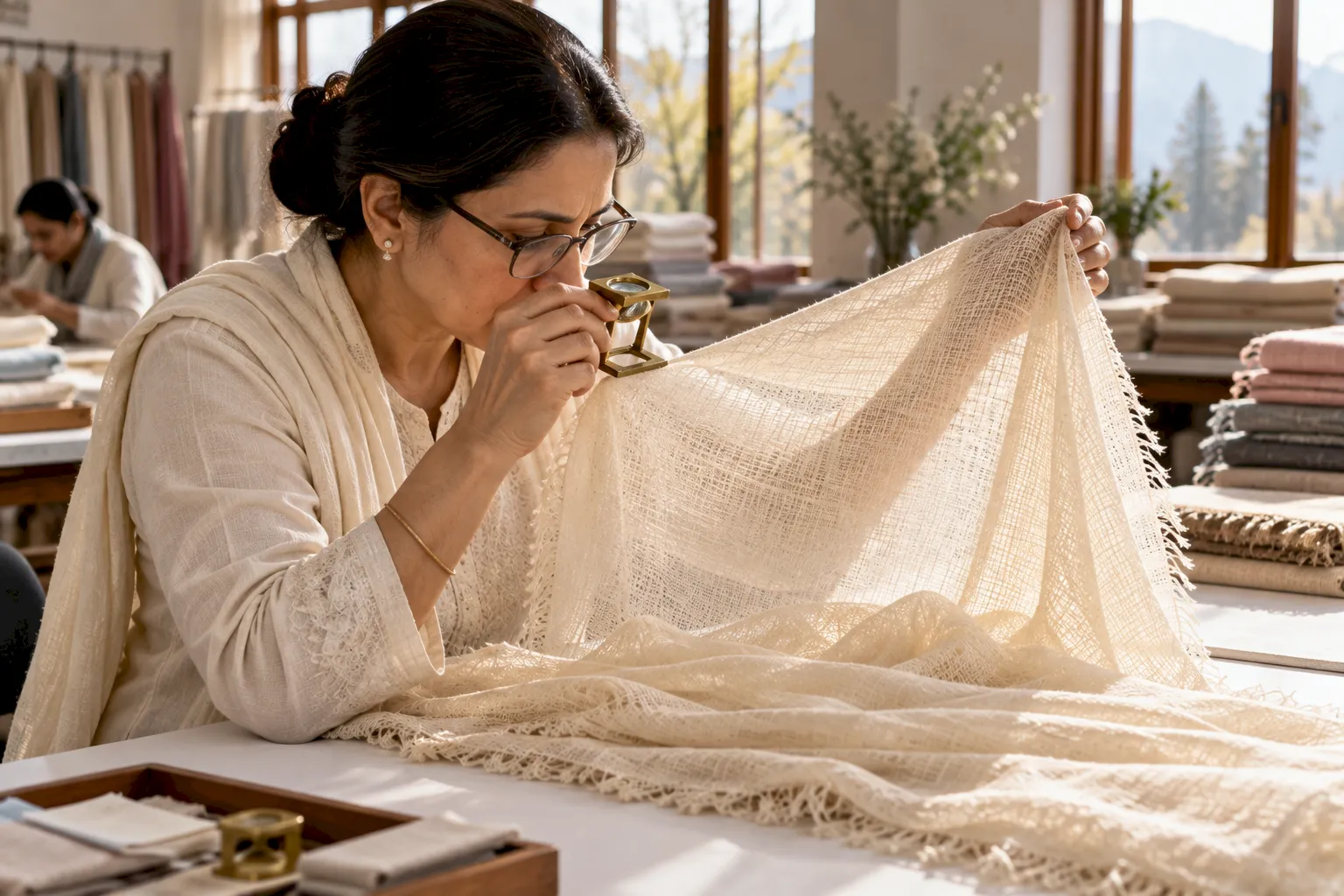
If the piece is hand-loomed and hand-finished, you are also paying for the time and skill of the people who made it, which is a cost that scales with labour, not materials alone. Whether that matters to you is a genuinely personal question, not one with a universally correct answer.
Where the Case Is Weaker
It is worth being honest about where the investment argument does not hold up well.
If you will not wear it often. No fibre quality offsets a piece that is rarely used. If you are buying primarily for status or a single event, the cost-per-wear logic simply does not apply.
If you are not willing to care for it properly. Natural fibres generally need more careful handling than synthetics: specific washing or dry cleaning, protection from moths, and careful storage. If you know you will not follow this, a piece's lifespan shortens considerably, undermining the longevity argument. Our guide to how to care for cashmere sets out what this actually involves.
If budget is genuinely tight. There is no ethical obligation to spend more than you comfortably can on an accessory. A good quality, honestly made piece at a lower price point, including a well-made blend, can be a perfectly reasonable choice if it is accurately described and suits your needs.
A Simple Framework for Deciding
Before buying a higher-priced natural-fibre piece, it is worth honestly answering a few questions.
Will I wear this regularly, or is it for one occasion? Regular use strengthens the case significantly; a single-occasion purchase weakens it.
Am I willing to follow the care instructions? If the honest answer is no, factor a shorter realistic lifespan into your thinking.
Do I actually prefer how it feels, or am I buying the idea of luxury rather than the experience of it? This is worth sitting with honestly, since the two are genuinely different reasons to buy something.
Does the price reflect real factors: fibre content, construction, hand work? Our pricing guide can help you judge this rather than relying on price alone as a signal.
The Environmental Dimension
There is also a less commonly discussed angle: buying one well-made piece that lasts many years, rather than several lower-quality pieces replaced repeatedly, has a real environmental benefit, since natural fibres also biodegrade at the end of their life, unlike most synthetics. This does not make every expensive purchase automatically sustainable, since genuine use still matters more than the purchase itself, but it is a real factor worth weighing. Our reflections on this are set out in sustainable luxury and natural fibres versus synthetics.
Our Honest Answer
We make hand-loomed, hand-finished pieces because we believe the result, in feel, drape and durability, is genuinely different from mass-produced synthetic alternatives, and we think that difference is worth the cost for someone who will wear and care for the piece. We do not think every accessory purchase needs to meet this bar, and a lower-cost, honestly made alternative is a reasonable choice for many people and many occasions. The investment case is real, but it depends on you, not just on the piece.
Frequently Asked Questions
Does a luxury scarf hold resale value?
Not meaningfully, in most cases. There is not a strong resale market for used scarves. The investment case rests on long-term use and cost per wear, not resale value.
Is a cashmere scarf worth it if I will only wear it occasionally?
The investment case weakens significantly with infrequent use. If a piece will be worn rarely, cost per wear stays high regardless of quality, and the fibre's longevity does not meaningfully offset that.
How long should a well-made cashmere scarf actually last?
With proper care, a genuinely well-made piece can last many years and often develops a better character with age rather than degrading, provided it is cared for as the label instructs.
Is it worth paying more for a hand-loomed piece specifically?
If you value the feel and drape that hand-loomed construction tends to produce, and you plan to wear the piece regularly, yes. If this distinction does not matter to you personally, a well-made machine-produced piece can be a reasonable alternative.
What is the biggest mistake people make when buying a luxury scarf as an investment?
Buying for a single occasion and assuming quality alone justifies the cost. The investment argument depends on ongoing, regular use, not on the piece's materials or craftsmanship alone.
Decide for Yourself
Explore our collection and our craftsmanship story to see what you would actually be investing in, or start with a scarf for everyday wear if you want to test the case for yourself.