How to Identify Real Cashmere: 9 Tests Before You Buy
Knowing how to identify real cashmere has become a genuine skill for anyone who buys luxury knitwear. The word "cashmere" appears on labels, tags and product pages with remarkable generosity, yet it is applied to everything from exceptional hand-loomed shawls to thin blends that contain only a trace of the fibre. The difference matters. Real cashmere is soft, warm, light and long-lived. Poor imitations pill within weeks, lose their shape and feel scratchy or oddly slippery.
This guide walks through nine practical tests you can use in a shop, at home or while browsing online. None of them requires a laboratory. Together they will help you tell pure cashmere from a blend, a blend from a lookalike, and a piece that will last from one that will disappoint. If you want the wider background first, our article on the language of cashmere covers the fibre itself in more depth.
What Is Real Cashmere?
Cashmere is the fine, soft undercoat of the cashmere goat. The animals grow this insulating layer in winter, and it is combed or shorn in spring. Each goat produces only a small quantity of usable undercoat each year, which is why cashmere has always been scarce and expensive compared with sheep's wool.
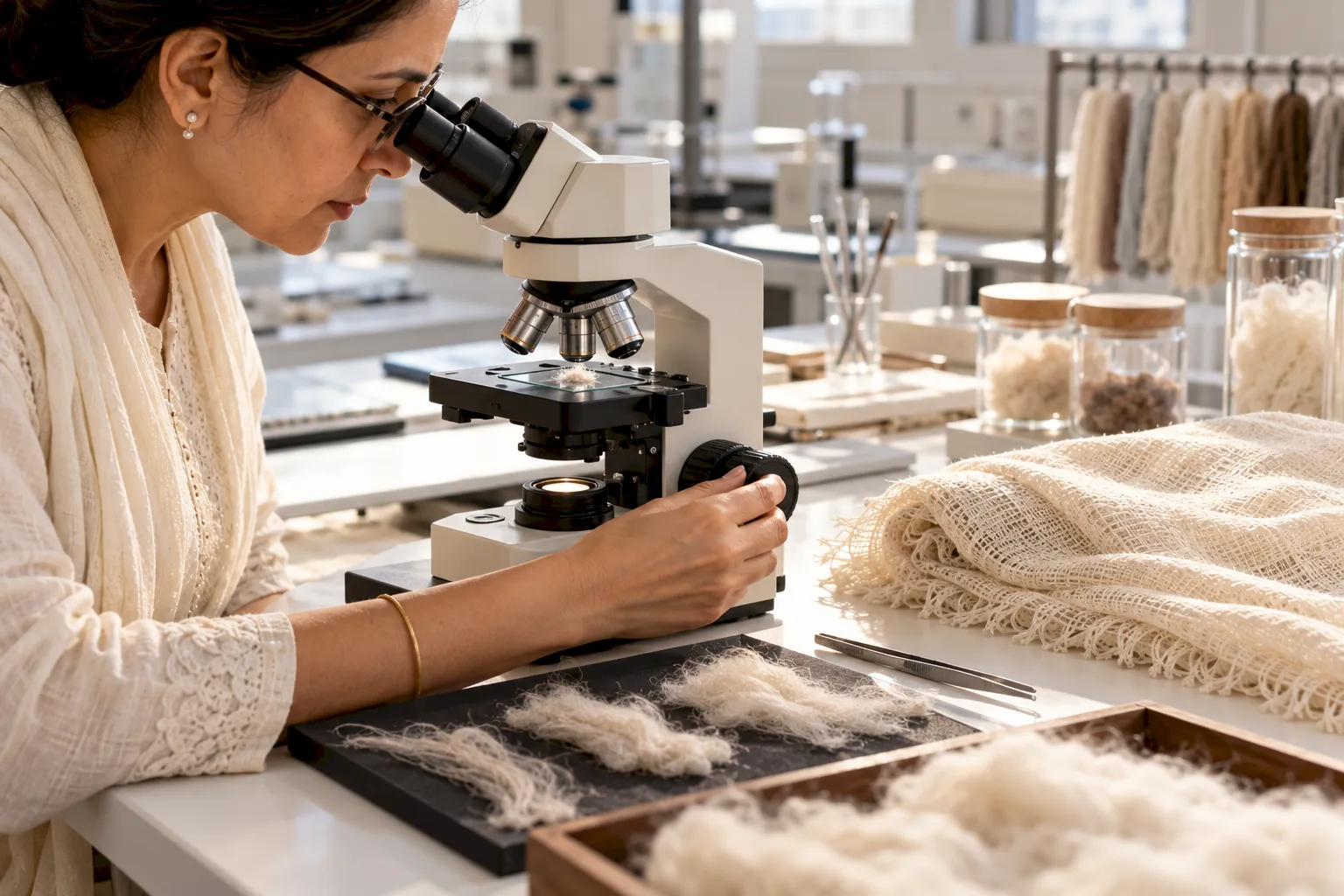
Two qualities define good cashmere: fineness and length. Fineness is measured in microns, one micron being a thousandth of a millimetre. Commonly cited industry definitions describe cashmere as fibre averaging around 19 microns or finer, and the very best is considerably finer than that. For comparison, a human hair is many times thicker. Length matters because longer fibres spin into smoother, stronger yarn that resists pilling and holds its shape.
Anything sold as cashmere should come from this undercoat. The coarser outer hair of the goat, known as guard hair, is removed in processing because it feels harsh and does not belong in a fine garment. When guard hair or short recycled fibre creeps in, quality falls quickly.
Test 1: Read the Composition Label Carefully
The label is your first and most reliable source of information. Look for wording such as "100% cashmere" or a clearly stated blend, for example "70% cashmere, 30% silk". A percentage tells you exactly what you are buying.
Be cautious with phrases that suggest cashmere without stating it. "Cashmere feel", "cashmere touch", "cashmere-like" and "cashmere soft" describe a finish or a marketing idea, not a fibre. The same applies to labels that mention cashmere but list no percentage at all.
In many countries, textile labelling rules require the fibre content to be stated accurately, and a legitimate maker will be proud to show it. If a garment has no composition label, or the label is missing on a supposedly luxury piece, treat that as a warning sign.
Test 2: Touch It and Notice How It Feels
Pass the fabric across the back of your hand or your inner wrist, where the skin is sensitive. Real cashmere feels soft and warm, with a slightly airy density. It should never feel prickly, and it should not feel unnaturally slick.
Beware of the opposite trap too. Some cheap knits are treated with softening chemicals that make them feel wonderfully smooth in the shop but wash out after the first clean, leaving a rough or thin fabric. A quick way to check is to rub the surface with your fingertips for a few seconds. Pure cashmere develops a gentle halo of fibres; a chemically softened blend may feel greasy or waxy.
Test 3: Look at the Surface Closely
Hold the piece under good daylight. Good cashmere has a fine, even surface with a subtle bloom, a soft haze of tiny fibres. It should not look shiny in the way polyester does. High sheen usually signals synthetic content or an added finishing treatment.
Check the colour as well. Natural fibre takes dye with a depth that is hard to imitate; the shade looks rich rather than flat. Uneven dyeing, streaks or unexplained shine are worth questioning.
Test 4: The Stretch and Recovery Test
Gently stretch a small section of the fabric between your fingers and release it. Quality cashmere springs back gracefully because the long fibres in the yarn are strong and elastic. If the fabric stays stretched, looks baggy or feels limp, the fibre is likely short, weak or mixed with cheaper material.
Do this gently. The point is to observe recovery, not to strain a garment you have not bought.
Test 5: Hold It Up to the Light
Lift the fabric toward a window or a lamp. A dense, even weave suggests well-spun yarn and careful construction. Thin patches, gaps or visible variation in thickness suggest weak yarn or hurried finishing.
Very fine, lightweight cashmere, such as a delicate scarf, will naturally be sheer in places. What you are checking for is consistency. A quality piece looks even from edge to edge.
Test 6: The Pilling Check
Every natural fibre pills to some degree, and real cashmere is no exception, especially in the first few wears as loose short fibres work free. However, a garment covered in pills on the shelf, or one that pills severely after a light rub, is a red flag.
Rub a small area of fabric against itself for about ten seconds. A few loose fibres are normal. A rapid buildup of tight little balls suggests short, low-grade fibre. Our guide to why cashmere pills and what to do about it explains the science and how to care for the surface.
Test 7: Consider the Weight and the Warmth
Good cashmere is deceptively light for the warmth it provides. If a garment is heavy and dense but feels only mildly warm, it may be padded out with heavier, cheaper fibre. Conversely, if a very thin piece is claiming to be pure cashmere at an extremely low price, be suspicious.
Warmth is also a useful field test. Hold the fabric against your cheek or neck for half a minute. Real cashmere quickly feels comforting without feeling stuffy, because the fibre traps air and lets moisture escape.
Test 8: Do the Sums on Price
Price is not a perfect indicator, but it is a useful one. Cashmere is expensive to produce. Goats yield little undercoat, the fibre must be carefully separated from coarser hair, and yarn spinning and finishing take skill and time. A large hand-loomed shawl or a substantial sweater sold at a bargain price rarely adds up.
At the same time, a high price does not guarantee quality. Some brands charge heavily for a name. The best approach is to compare price against transparency: does the seller state the composition, the origin and how the piece was made? A fair price for real cashmere sits alongside clear information.
Test 9: Ask About Origin and Construction
The last test is a conversation. A reputable maker can tell you where the fibre comes from, how the yarn was made and how the piece was woven or knitted. You should be able to find answers to these questions on a product page, in a care leaflet or by asking customer service.
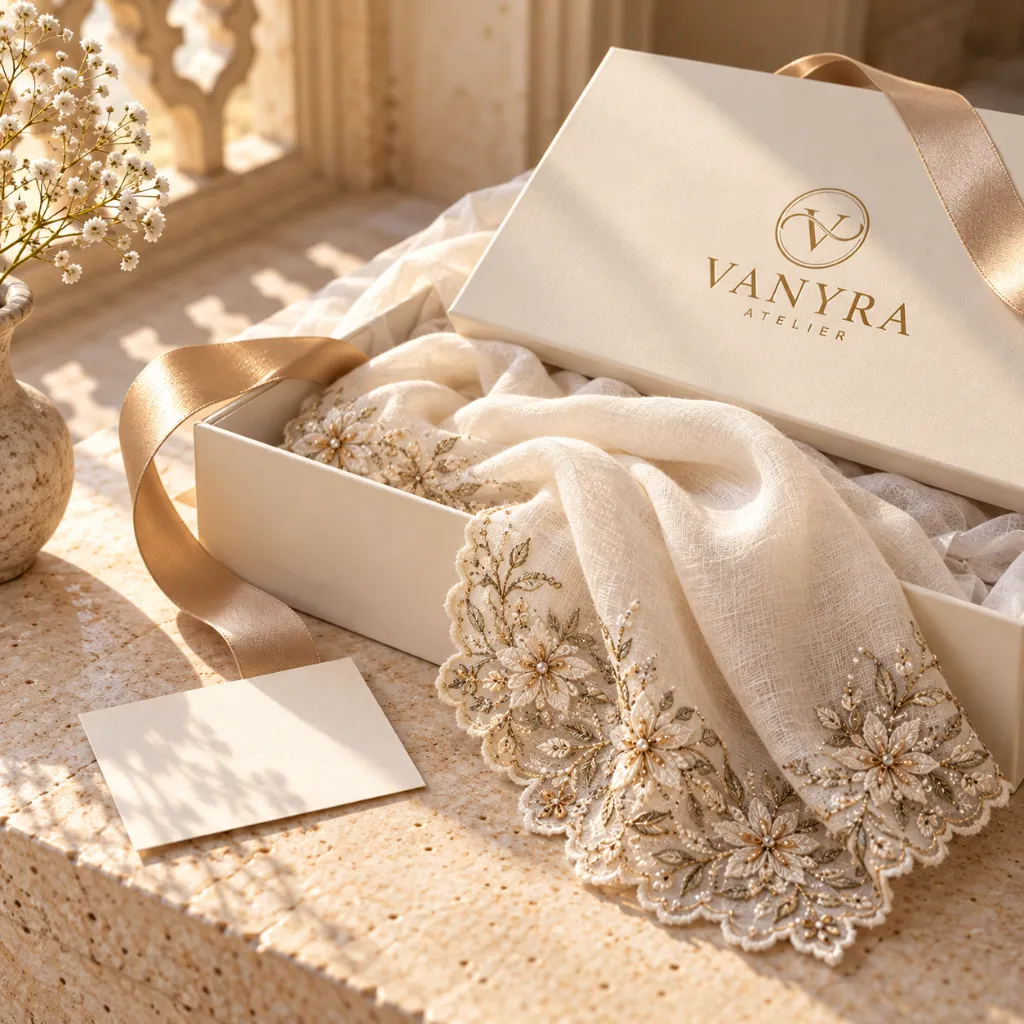
At VANYRA ATELIER, each piece is hand-loomed and hand-finished in India, using techniques passed through generations of craftspeople. You can read more about how we work on our craftsmanship page and about the fibre in our guide to cashmere as a material. If you would like to see the standard we work to, look at a piece such as the Golden Peach pure cashmere shawl or the Forest Moss cashmere wrap.
Common Cashmere Myths Worth Ignoring
Several beliefs about cashmere circulate widely, and it helps to set them aside.
- "If it is soft, it must be cashmere." Softness can be manufactured with chemical finishes and fine synthetic fibres. Softness is a symptom of good cashmere, not proof of it.
- "The burn test is the best test." Some guides suggest burning a thread. It can distinguish animal fibre from synthetic, but it is destructive, impractical in a shop and cannot tell cashmere from ordinary wool. Use the label and the touch tests instead.
- "Pilling means it is fake." Some pilling is normal in genuine cashmere. What matters is how much and how quickly.
- "Cashmere and pashmina are the same thing." They are related but not identical. Pashmina refers to the very fine cashmere fibre traditionally associated with Kashmir and the high-altitude Changthangi goats, and to shawls woven from it. Our piece on the history of the Indian shawl explores the difference.
How to Care for Real Cashmere Once You Own It
Buying genuine cashmere is only half the job. Looking after it properly determines whether it lasts two seasons or twenty years. Follow the care label on each garment; many fine pieces, including ours, are best dry cleaned. Store cashmere folded in a breathable cotton bag, away from direct sunlight and damp. Our detailed guides on how to care for cashmere and how to store woollens and prevent moth damage cover every step.
Quick Checklist for Buying Cashmere
- Composition label states a clear percentage of cashmere.
- Fabric feels soft, warm and slightly airy, not slick or waxy.
- Surface has a fine, even bloom with no plastic-like sheen.
- Fabric recovers after a gentle stretch.
- Weave is dense and even when held to the light.
- Only minor pilling after a light rub.
- Price is consistent with the size, weight and construction.
- The seller can explain origin and how the piece was made.
Frequently Asked Questions
How can I tell if my cashmere is real at home?
Start with the label, which should state the fibre content. Then check the feel, the stretch-and-recovery, the density of the weave and the surface under daylight. No single test is decisive, but several together give a reliable picture.
Is 100% cashmere always better than a blend?
Not necessarily. Pure cashmere is soft and warm, but blends with silk or fine wool can add strength, drape or durability. What matters is that the blend is stated honestly and the fibres are of good quality.
Why is real cashmere so expensive?
Each goat produces only a small amount of usable undercoat, the fibre has to be separated from coarser hair, and spinning and finishing fine yarn takes time and skill. Hand-loomed and hand-finished pieces involve even more labour.
Does real cashmere pill?
Yes, to some extent. Loose short fibres tend to work free during the first few wears. Regular gentle care with a cashmere comb removes them, and the surface usually settles afterwards.
What is the difference between cashmere and merino wool?
Cashmere comes from goats and is finer and lighter for its warmth. Merino comes from merino sheep and is generally more robust and easier to care for. Our comparison of cashmere versus merino wool explains which suits which purpose.
Buy with Confidence
Once you know what to look for, spotting real cashmere becomes second nature: read the label, trust your hands, check the construction and choose a maker who welcomes questions. Explore the full VANYRA ATELIER collection, browse our cashmere pieces, or contact our team if you would like advice on choosing the right piece.