How to Choose a Shawl: Size, Fibre, Weave and Colour Guide
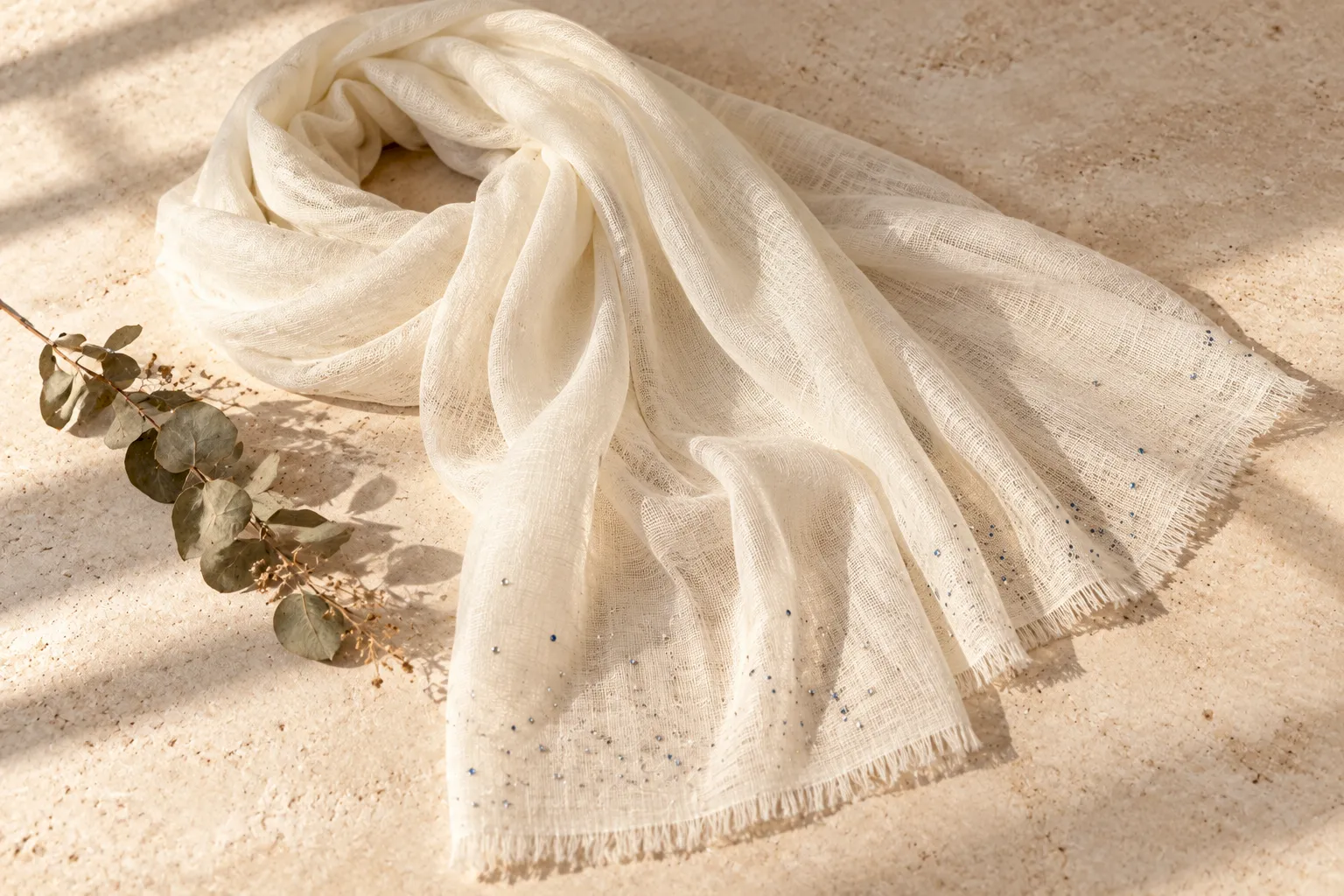
A great shawl can be worn for decades, so it is worth choosing one carefully. Yet buying a shawl is surprisingly confusing. Sizes are described in inconsistent ways, fibres are named loosely, colours look different online and in daylight, and it is hard to tell a lasting piece from one that will disappoint. This guide explains how to choose a shawl step by step: what to consider about size, fibre, weight, weave, colour, finish and price, how to match a shawl to how you live and what to check before you buy.
Whether you are choosing for yourself or as a gift, the same principles apply. Start with how you will use it, then work through the details. For styling ideas once you have chosen, see how to wear a shawl.
Step 1: Decide How You Will Use It
The best shawl depends on what you need it for.
- Everyday warmth in the office or at home: a medium-weight merino or cashmere wrap.
- Travel: a light, generous cashmere wrap that packs small. See travelling with cashmere.
- Weddings and festive occasions: a fine cashmere shawl in a colour that complements festive clothes.
- Layering over tailoring: a neutral wrap that fits neatly under or over a coat.
- A gift: a versatile neutral. See our cashmere gift guide.
- An heirloom: a fine, hand-loomed piece in classic colours.
Write down your main use and your second use. A shawl that does both well is a good choice.
Step 2: Choose the Fibre
The fibre decides softness, warmth, weight and care.
Cashmere
Very soft, light and warm, with a beautiful drape. Excellent for shawls you want to feel special. More delicate than wool. Read about it in our cashmere material page, and check quality with our guide to how to identify real cashmere and cashmere quality explained.
Merino wool
Warm, resilient and easier to look after. A good choice for everyday shawls and wraps. See merino wool.
Silk
Light, smooth and elegant. Best for accents, layering and mild weather. A silk shawl or scarf is beautiful, though it provides less warmth on its own. See silk and is silk warm.
Blends
Cashmere and silk blends combine softness and a subtle sheen. Cashmere and merino blends offer added durability. A blend is a fine choice if it is clearly labelled.
If you cannot decide between cashmere and merino, our comparison of cashmere vs merino wool explains the trade-offs.
Step 3: Choose the Size
Size matters more than most people expect, because it decides how many ways you can wear the shawl.
- Small wraps and large scarves (roughly 70 cm by 180 cm): neat and easy to wear as a scarf, though less flexible as a shoulder wrap.
- Medium shawls (roughly 100 cm by 200 cm): the most versatile size. They wrap, drape, loop and fold well.
- Large shawls and wraps (larger than this): very generous. They can serve as a blanket and offer dramatic draping. They are heavier and bulkier to carry.
These dimensions are guides, and makers use different conventions, so check the exact measurements on the product page. Consider your height and how much fabric you like around you. A tall person may prefer a longer shawl. If you love dramatic draping, choose a larger size. If you want something you can tuck into a handbag, choose smaller.
Step 4: Consider Weight and Weave
Weight
Lightweight shawls drape softly and pack small, and are good for travel and mild weather. Medium-weight shawls are the all-rounders. Heavier shawls give the most warmth and hold their shape, and they suit cold climates.
Weave
- Plain weave is simple and balanced, and gives a light, even fabric.
- Twill has a diagonal line and more drape and body.
- Herringbone and other patterned weaves add texture and interest.
- Jacquard and embroidered patterns add decoration, and are common in festive shawls.
Hold the shawl up to the light. A good weave looks even and dense, without thin patches. Check our explanation of how a handloomed shawl is made to understand what you are looking at, and handloom vs powerloom to understand how the two differ.
Step 5: Choose the Colour
Colour is personal, but a few principles make it easier.
Start with what you wear
Look at your wardrobe. Which colours do you reach for most? A shawl that harmonises with them will be worn constantly. If most of your clothes are neutral, almost any shade works. If you wear strong colours, a neutral shawl calms them.
Neutrals are the safe foundation
Ivory, stone, champagne, soft grey and camel go with nearly everything and suit most skin tones. They are also the safest choice for gifts.
Warm or cool undertones
If gold jewellery flatters you, warm tones such as golden peach, amber and camel may suit you. If silver flatters you more, cooler tones such as cloud grey and cool ivory may be more flattering. If you are unsure, hold fabric near your face in daylight and see whether your skin looks healthy and bright or dull.
Deep colours for contrast
Midnight, forest green and deep rose look striking over lighter clothes and are forgiving in daily use. They also hide marks more easily.
Judge colour in daylight
Photographs and shop lighting change how colour appears. If you can, view a shawl in natural light. When buying online, read the colour description carefully and check the product photos.
A colour guide by shade
- Golden Peach: a soft, warm neutral that flatters many skin tones. See the Golden Peach pure cashmere shawl.
- Ivory Mist: a calm, light neutral. See the Ivory Mist merino wrap.
- Forest Moss: a deep, natural green. See the Forest Moss cashmere wrap.
- Midnight Weave: a dark, elegant tone. See the Midnight Weave merino wool shawl.
- Rose Ash: a soft, muted pink-grey. See the Rose Ash cashmere scarf.
Step 6: Check the Finish
Details show quality.
- Edges. They should be neat and even, with no fraying.
- Fringes. Hand-twisted or hand-knotted fringes are a mark of careful finishing. They should be even in length and secure.
- Surface. It should feel smooth and consistent, without snags or visible flaws.
- Colour. It should be even, with no streaks or patches.
- Hand. The fabric should feel soft and have a pleasant drape.
Step 7: Check the Label and the Seller
Read the composition label. Look for a clear percentage of each fibre. Be cautious with phrases such as "cashmere feel" or "pashmina style". Learn to read what it says and what it leaves out by following our guide to identifying real cashmere.
Choose a seller who can tell you where and how the piece was made, and who provides clear information on size, composition, care and delivery. Only rely on specifications that a seller can genuinely support. At VANYRA ATELIER, each piece is hand-loomed and hand-finished in India, and we are glad to answer questions about any piece. See our craftsmanship page and our house.
Step 8: Consider Care
Ask how you will look after it. Our pieces are dry clean only, to be stored folded in a breathable bag away from direct sunlight. If you prefer a piece you can hand wash, check the label carefully. Read how to care for cashmere for the full routine.
Step 9: Think About Budget
Shawls span a wide range of prices. Consider cost per wear. A shawl you wear regularly for years is a modest cost per use, even at a higher price. Spend the most on the piece you will use most. For more on this idea, see sustainable luxury.
Step 10: Consider Personalisation
If you are choosing a shawl as a special gift or an heirloom, personalisation can make it unique. At VANYRA ATELIER, we offer monograms, portraits and bespoke weaves. See our personalisation page.
Quick Decision Guide
- I want the softest, lightest, most luxurious shawl: cashmere, medium size, neutral or soft colour.
- I want a shawl for everyday use: merino wool, medium weight, a colour that works with my wardrobe.
- I want a travel wrap: lightweight cashmere, generous size, neutral colour.
- I want a festive shawl: fine cashmere in a colour that complements my outfit.
- I want a gift and I am unsure: cashmere in a neutral shade, medium size, with a gift card as a backup. See gift cards.
Common Mistakes to Avoid
- Choosing by colour alone without checking fibre and size.
- Buying too small and finding it does little.
- Ignoring care requirements and later disliking the upkeep.
- Trusting vague labels. Read the composition.
- Buying the cheapest option and finding it pills or loses shape. See why cashmere pills.
- Not testing it in daylight.
Frequently Asked Questions
What size shawl should I buy?
A medium shawl of about 100 cm by 200 cm is the most versatile, because it can wrap, drape and loop. Check the exact dimensions of each piece.
Is cashmere or merino better for a shawl?
Cashmere is softer and lighter, and suits special shawls and travel wraps. Merino is more robust and easier to care for, and suits everyday use.
What colour shawl goes with everything?
Neutrals such as ivory, stone, champagne, soft grey and camel go with most outfits and skin tones.
How can I tell if a shawl is good quality?
Check the composition label, the evenness of the weave, the finish of the edges and fringes and the feel and drape. Ask the seller where and how it was made.
How should I look after a shawl?
Follow the care label. Air it between wears, fold it rather than hang it and store it clean in a breathable bag. Our pieces are dry clean only.
Can I personalise a shawl?
At VANYRA ATELIER, yes, with monograms, portraits and bespoke weaves. Allow extra time for personalised orders.
Find Your Shawl
The right shawl feels like it was made for you: the right warmth, the right size and a colour you love. Explore the VANYRA ATELIER collection, or contact our team and we will help you choose.